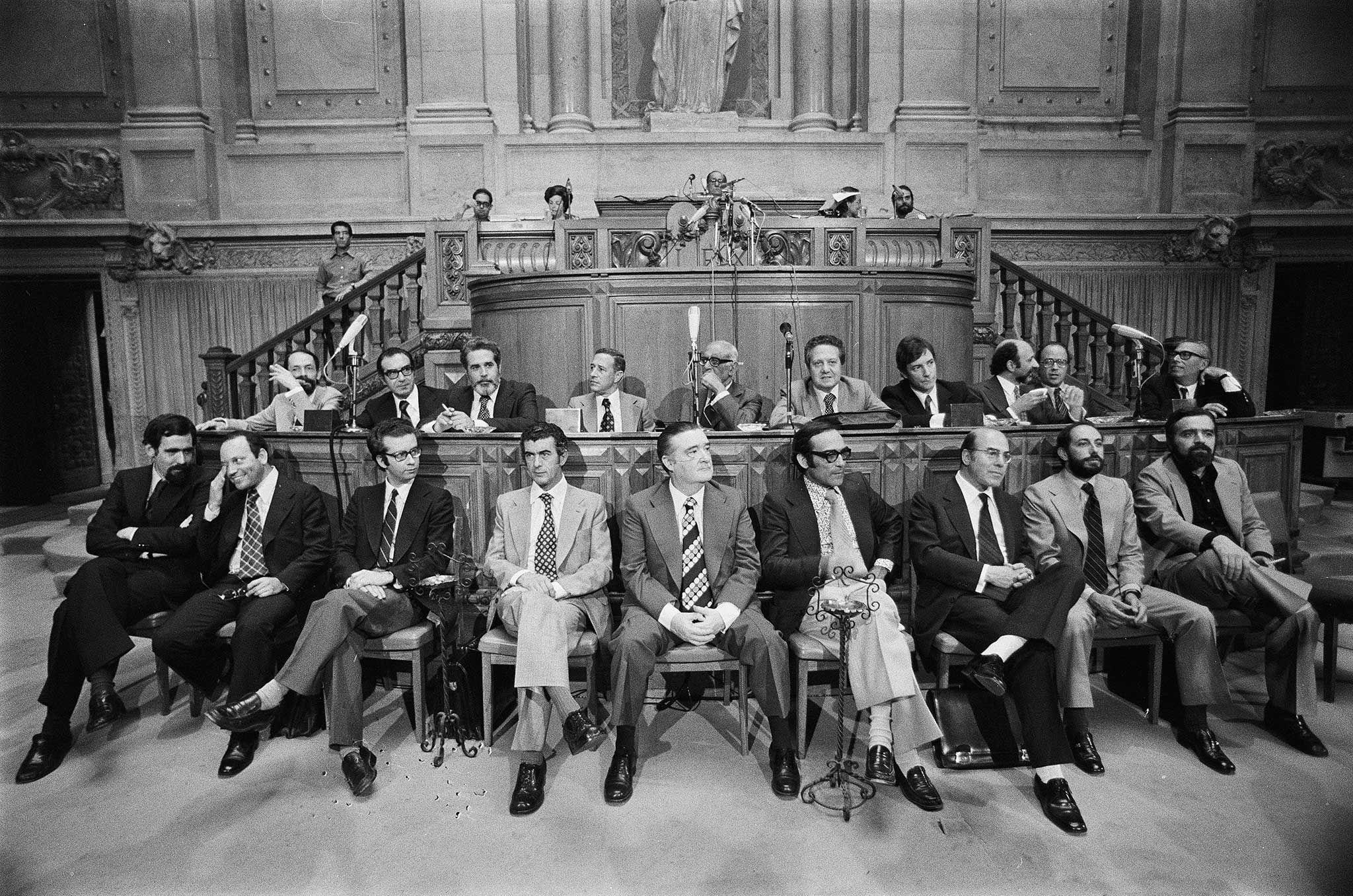
Exhibition "Mário Soares. Portugal, what Revolution?"
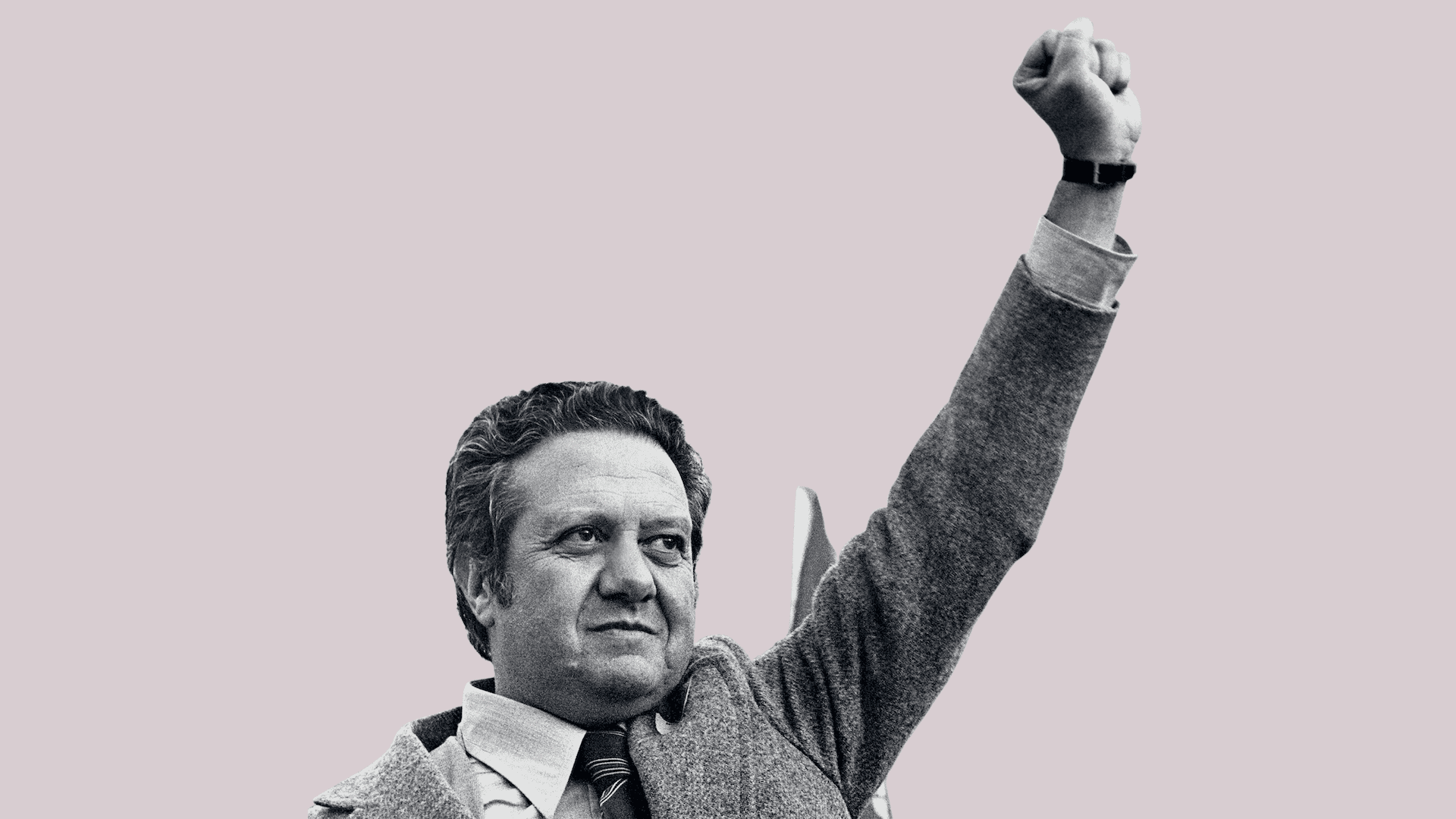
Mário Soares and the Revolution
In this exhibition, images speak and words reveal, forming an alliance in which they complement and enhance one another.
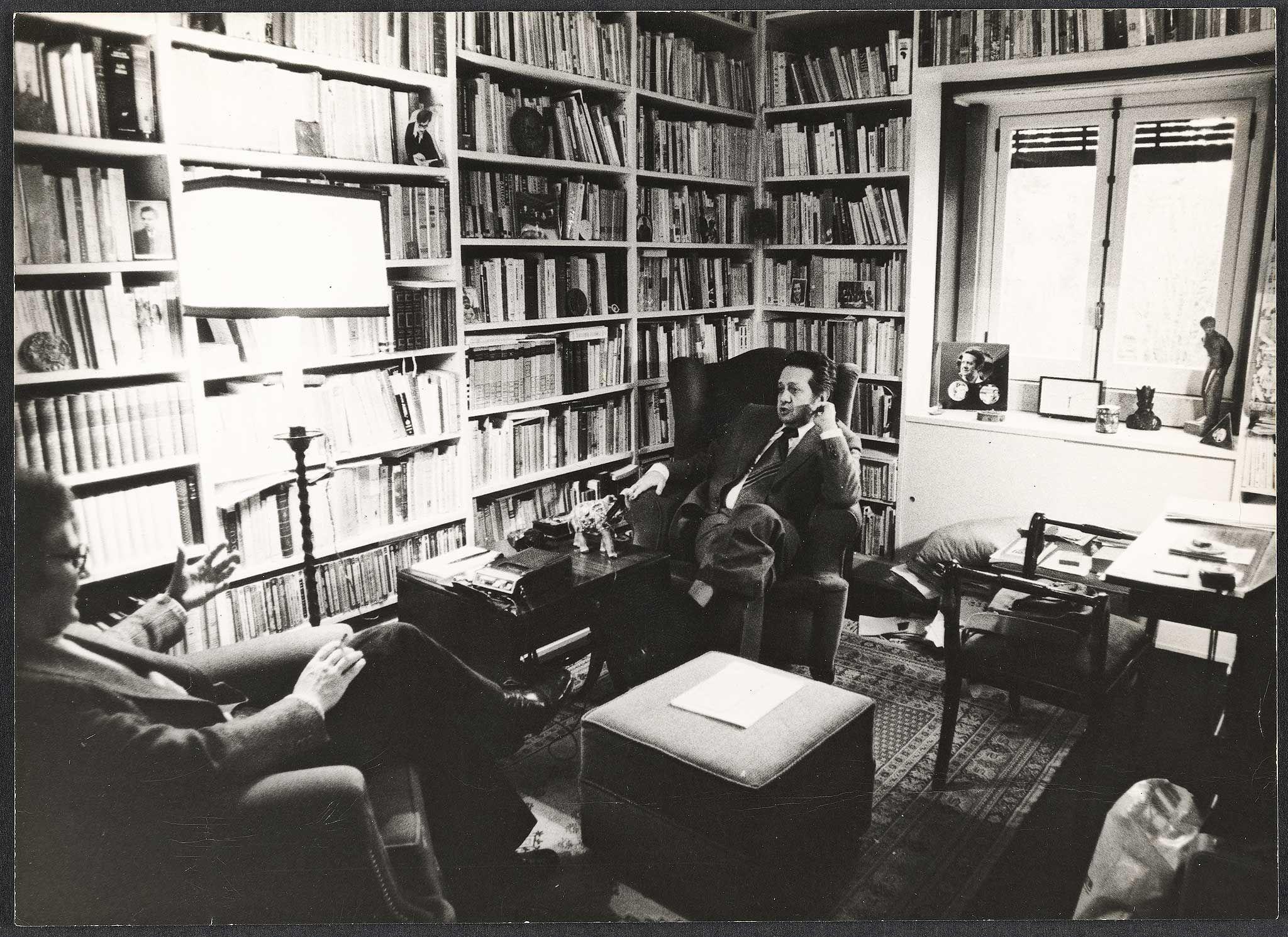
In a long interview with the French journalist Dominique Pouchin (Le Monde), which he revisited and updated three decades later, Mário Soares recounted the Portuguese Revolution, expressing his views on its decisive turning points and pivotal moments. It is a vivid conversation, conducted in the heat of events and in close proximity to both the events and their protagonists, unfolding like a film, with the relentless tumult of sounds and slogans of the Ongoing Revolutionary Process (PREC) as its soundtrack.
“Portugal: Que Revolução?” ("Portugal: What Revolution?") The question itself conveys the sense of an uncertain and contradictory time, unpredictable and fraught with risk, in which the Revolution, amid a clash of competing legitimacies and opposing projects, advanced and retreated in a frenetic and confused zigzag.
Soares narrates and explains, interprets and argues, asserting his positions and offering his judgments. From all that was said in this intense and at times uncomfortable dialogue, the passages selected are those that allow us to grasp the decisive events, in all their often impetuous and heightened drama.
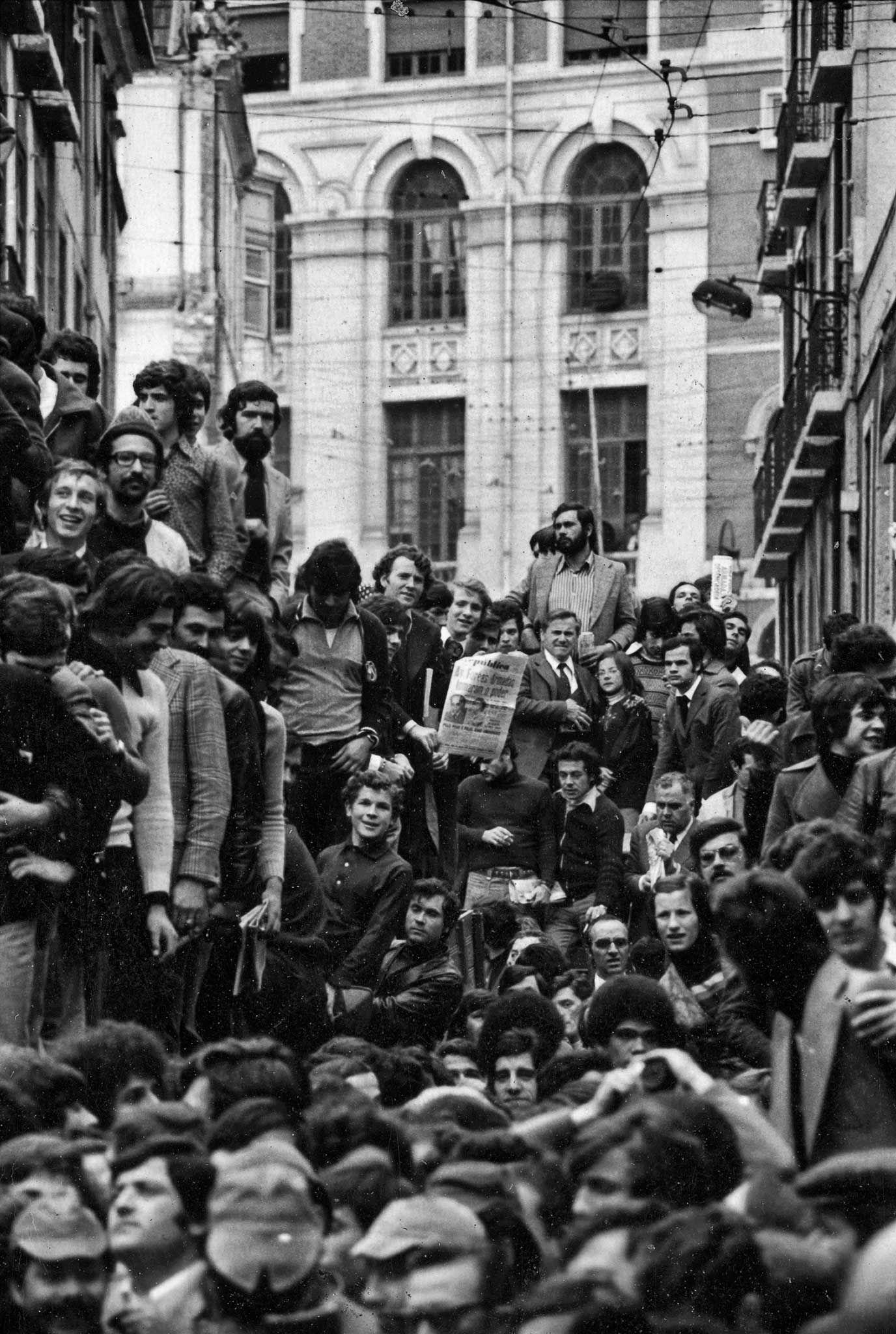
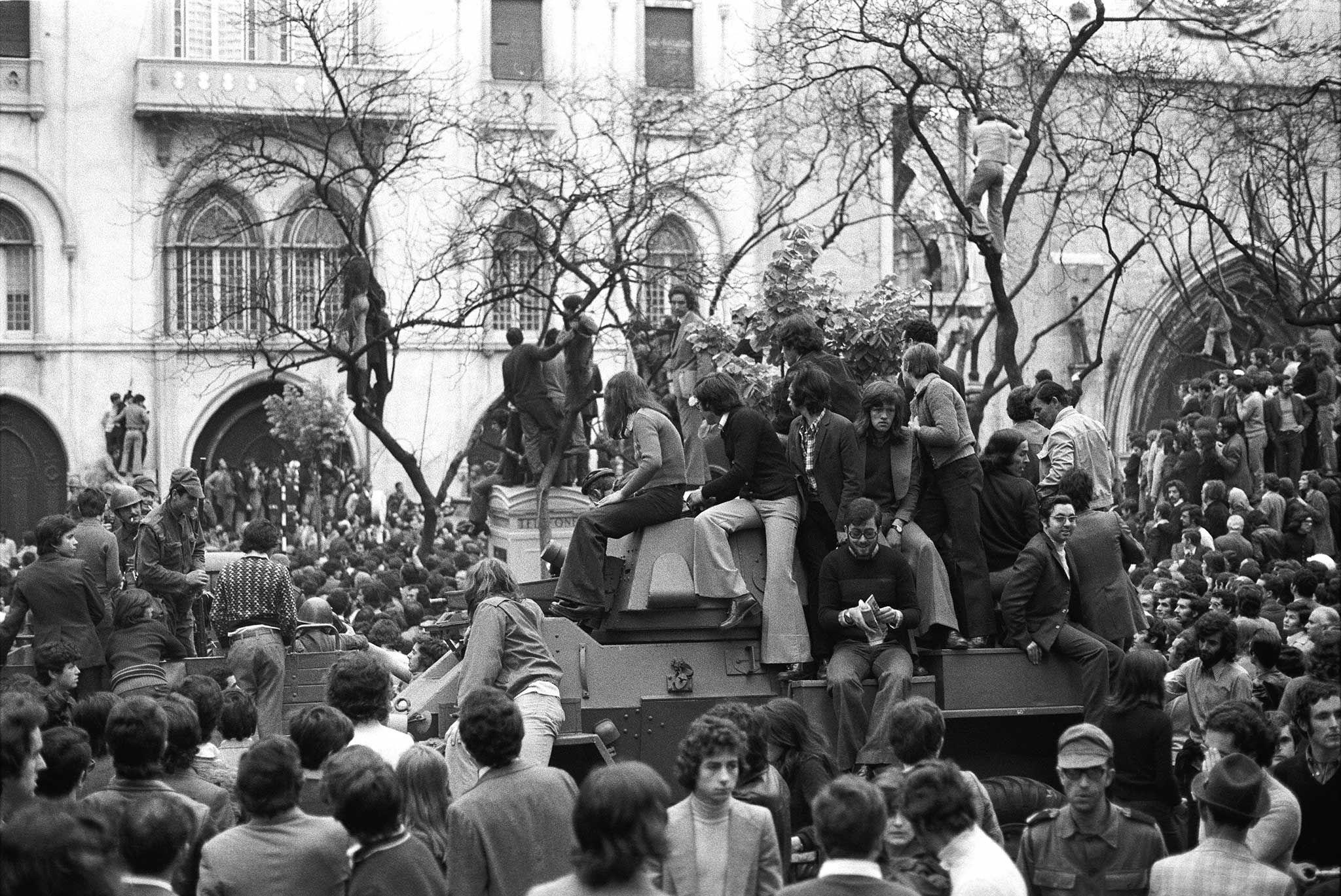
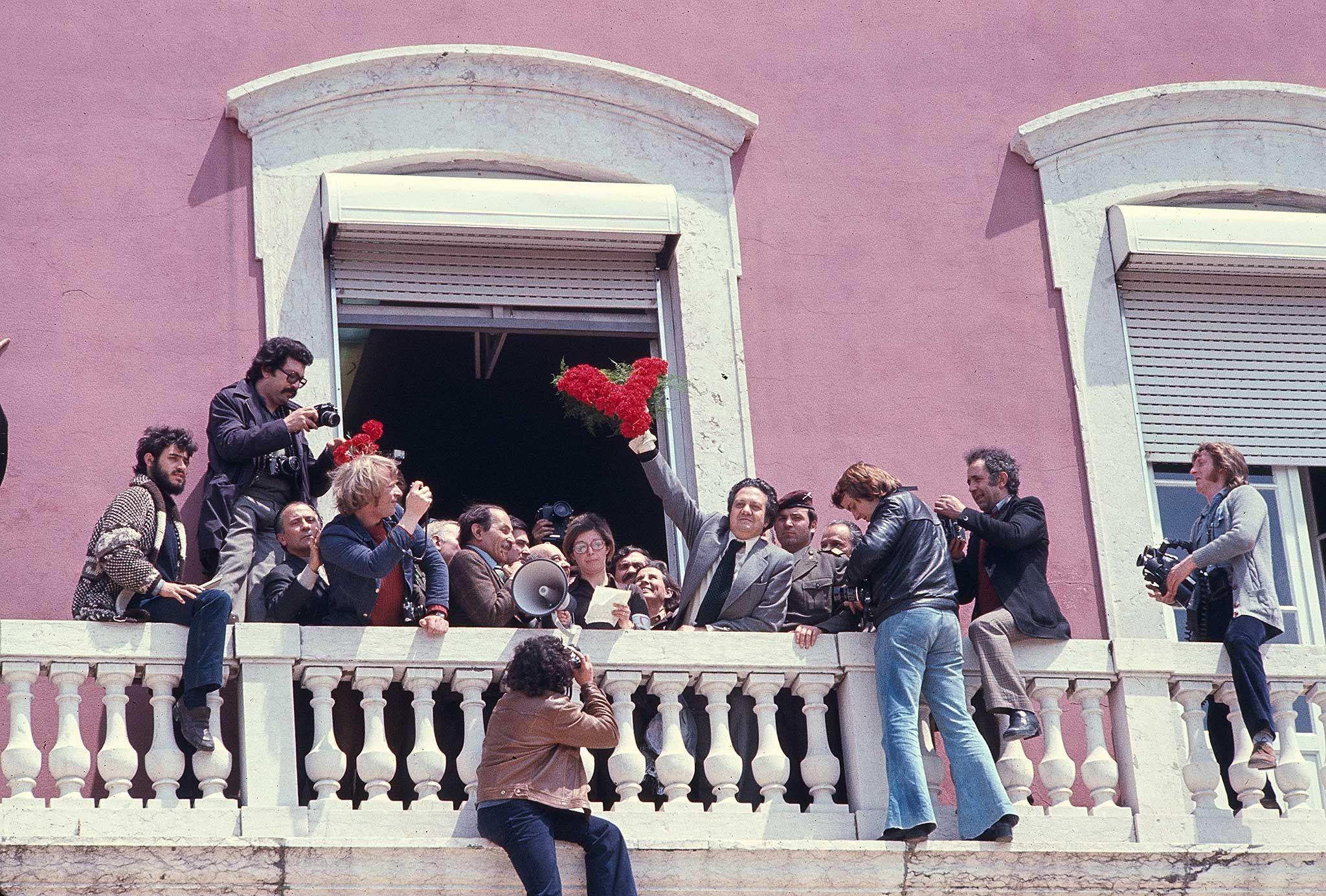
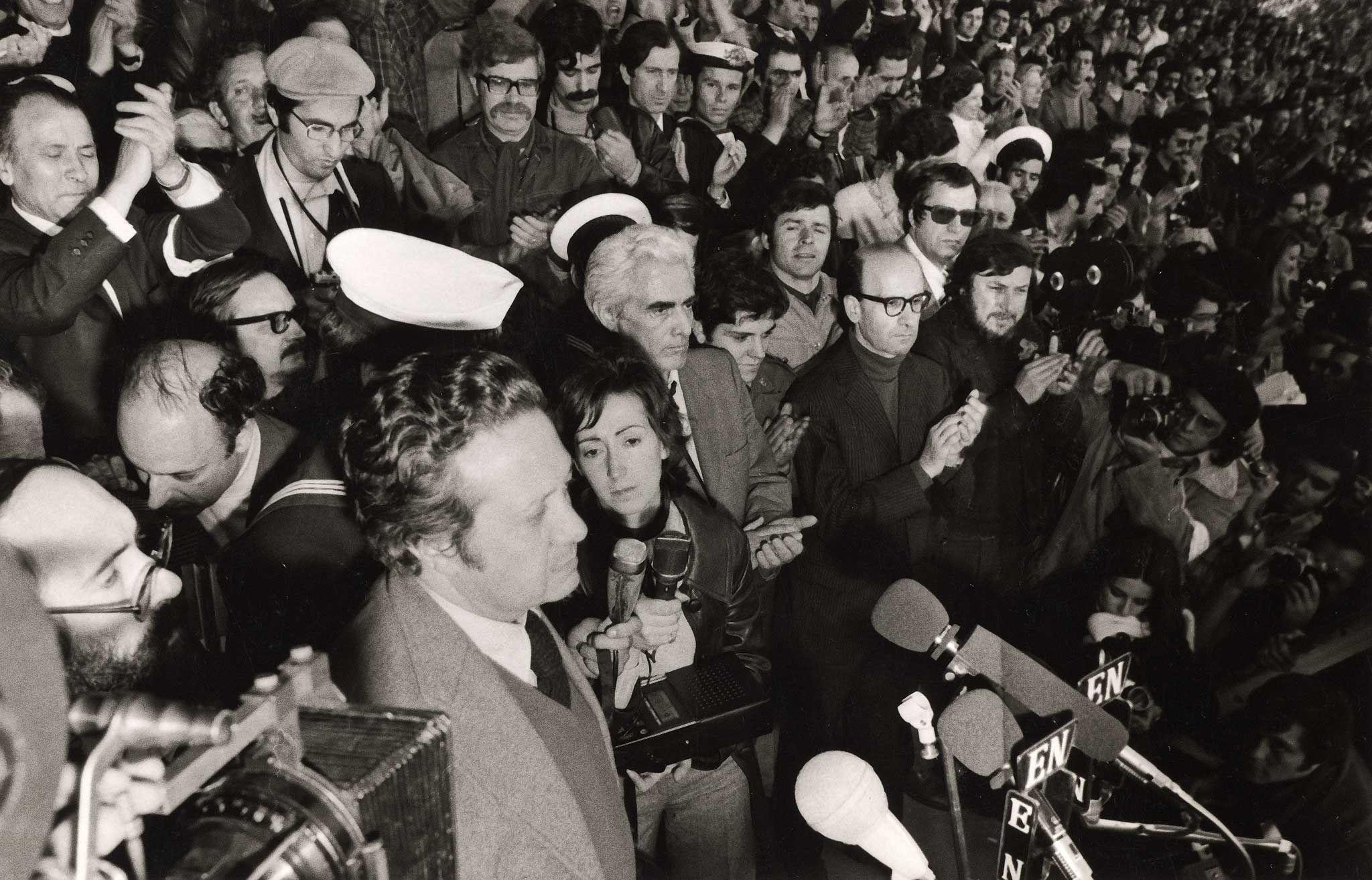
The photographs presented here, by various renowned photographers, speak with a visual voice as clear, forceful, vertiginous and swift as the feverish events they portray.
As we move through this exhibition, we come to understand how Mário Soares experienced and perceived the events in which he was one of the main protagonists, in a struggle that helped make Portugal a European democracy.
A dialogue with Dominique Pouchin
Dominique Pouchin (b. 1949) met Mário Soares for the first time in Paris, on the eve of the Revolution, in March 1974. A young journalist for Le Monde, he would shortly afterwards become the newspaper’s special correspondent in Lisbon. As a student, he had taken part in May 1968 and had been involved with the Unified Socialist Party (PSU) and the Revolutionary Communist League. In Portugal, he closely followed the events of the Ongoing Revolutionary Process (PREC), interviewing political and military figures as well as the people who took to the streets across the country. He witnessed demonstrations, strikes, occupations, rallies and press conferences.
During those months, he was in Portugal 17 times, spending more time in Lisbon than in Paris. Years later, he would recall: “Looking back, I would say that the Portuguese Revolution was a pivotal moment in post-war history.” Pouchin later became editor-in-chief and then editorial director of Libération, and briefly served as director of France-Soir.
Mário Soares. Portugal: que Revolução? Diálogo com Dominique Pouchin, the result of several days of conversation between Soares and Pouchin about the events of the Portuguese Revolution (1974-1976), was launched shortly before the legislative elections, in April 1976, at the Sá da Costa bookshop in Lisbon. The book, originally published in French (Calmann-Lévy, 1976), was translated by Isabel Soares and published by Perspectivas & Realidades. It was also released in Italy (La Nuova Italia, 1976), Brazil (Paz e Terra, 1976) and Venezuela (Monte Ávila Editores, 1977).
In 2001, the journalist interviewed the politician again, this time for the French television channel Histoire. This interview led to a new book, published in France the following year in the “Mémoire Vivante” collection (Flammarion). In 2003, the work was published in Portuguese under the title Memória Viva (Quasi Edições). Passages from both books by Soares with Pouchin were selected for inclusion in this exhibition text.
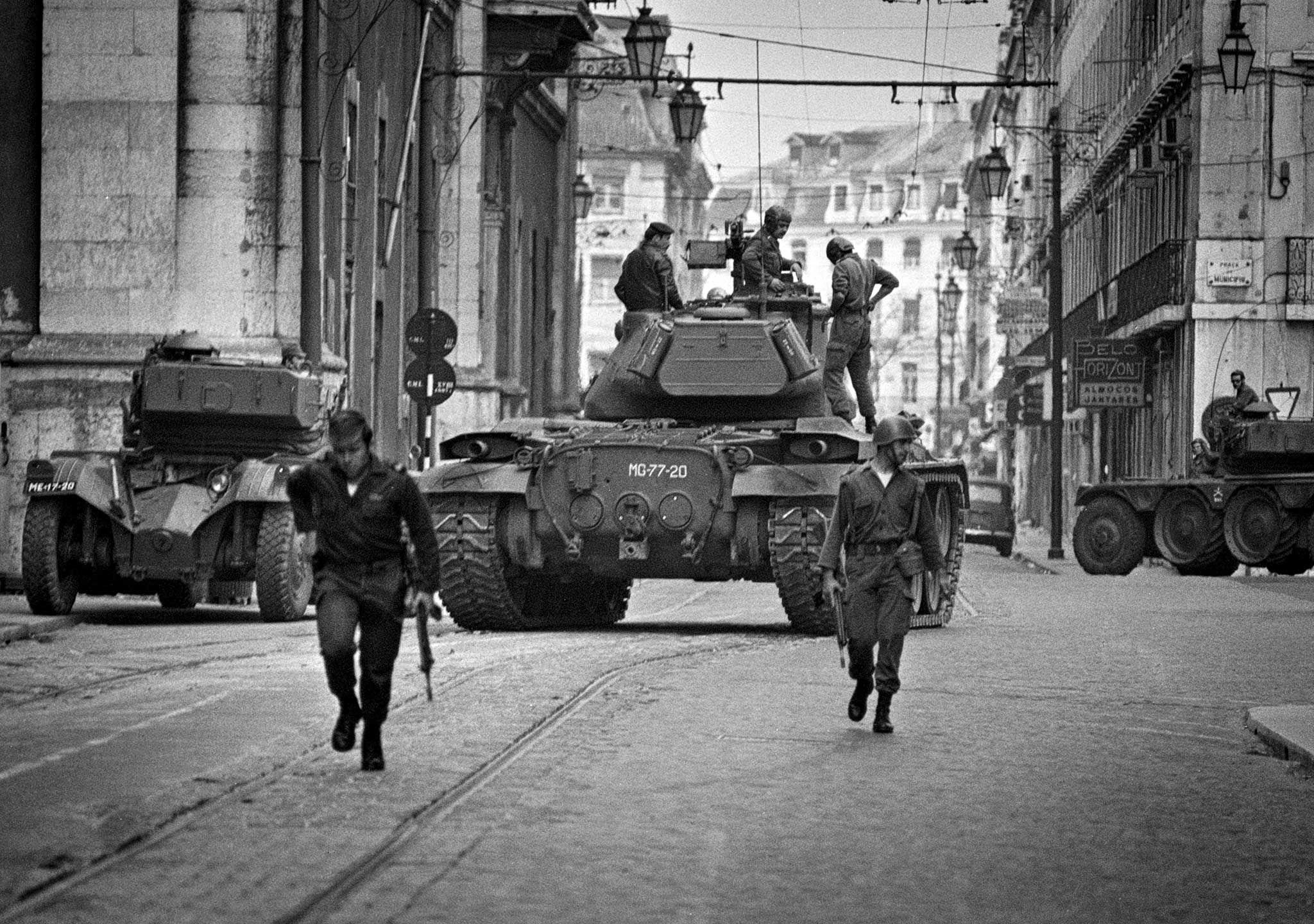
The dawn of 25 April
“I was in Bonn, at the invitation of my friends from the Social Democratic Party (SPD). On the evening of the 24th, I was invited to dinner with the Minister of Defence. Once again, I had to resign myself: they listened to me with sympathy and clear interest, but they did not believe me. (…) I knew I was right. I had never felt the end of fascism so near. (…) It was he, however, who had me woken at six in the morning. The tone had changed: ‘You were right, very serious things are happening in Lisbon. It seems the Revolution is in the streets.’ I was due to meet Willy Brandt that very day, but I hurried back to Paris, where I had an important network of information.”
The Freedom Train and the return to Portugal
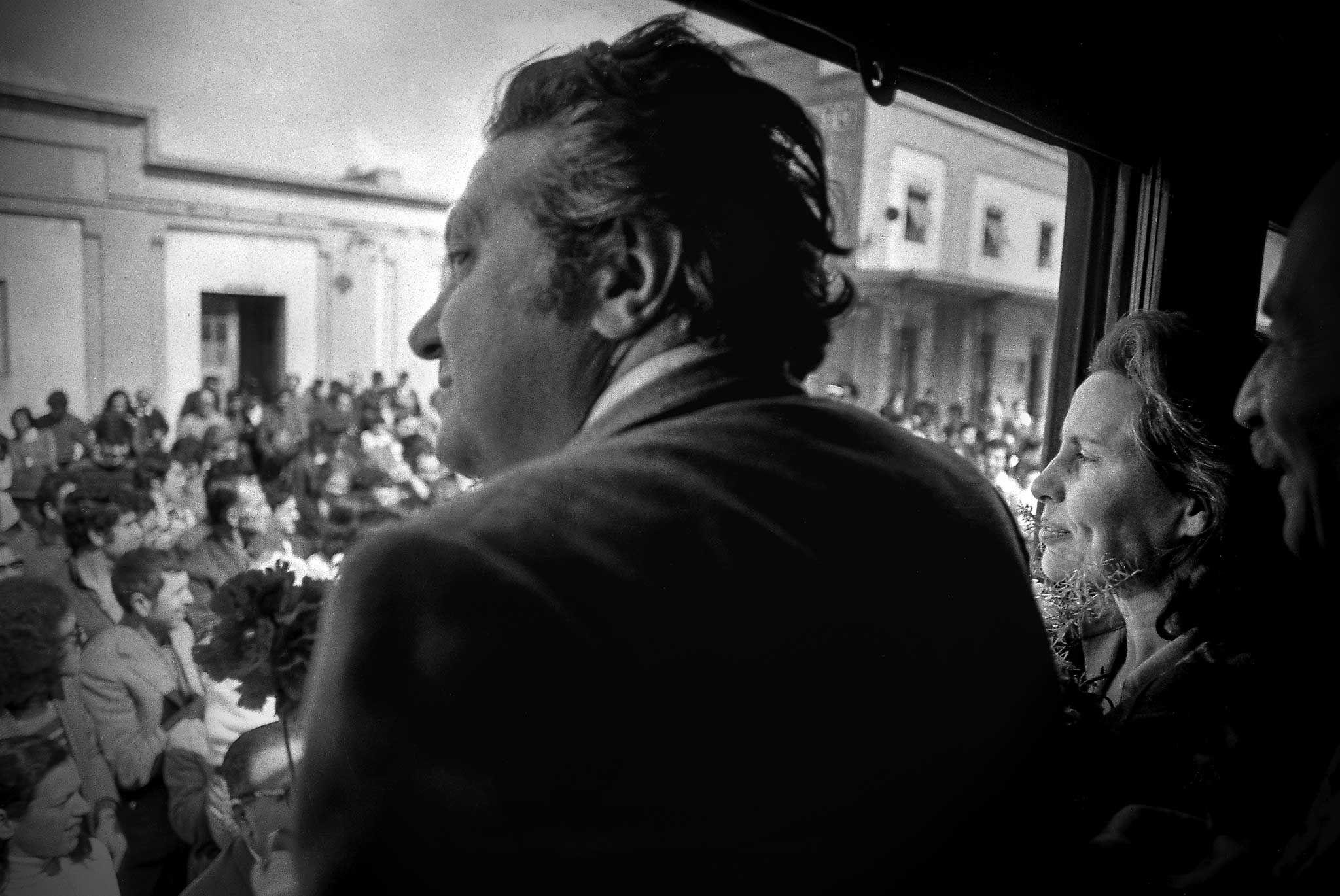
“I had decided to return, whatever the cost, even clandestinely if necessary. As there were no flights, I boarded the train on the morning of 27 April with Ramos da Costa and Tito de Morais, two other [socialist] party leaders, as well as Fernando Oneto, like me exiled in Paris.
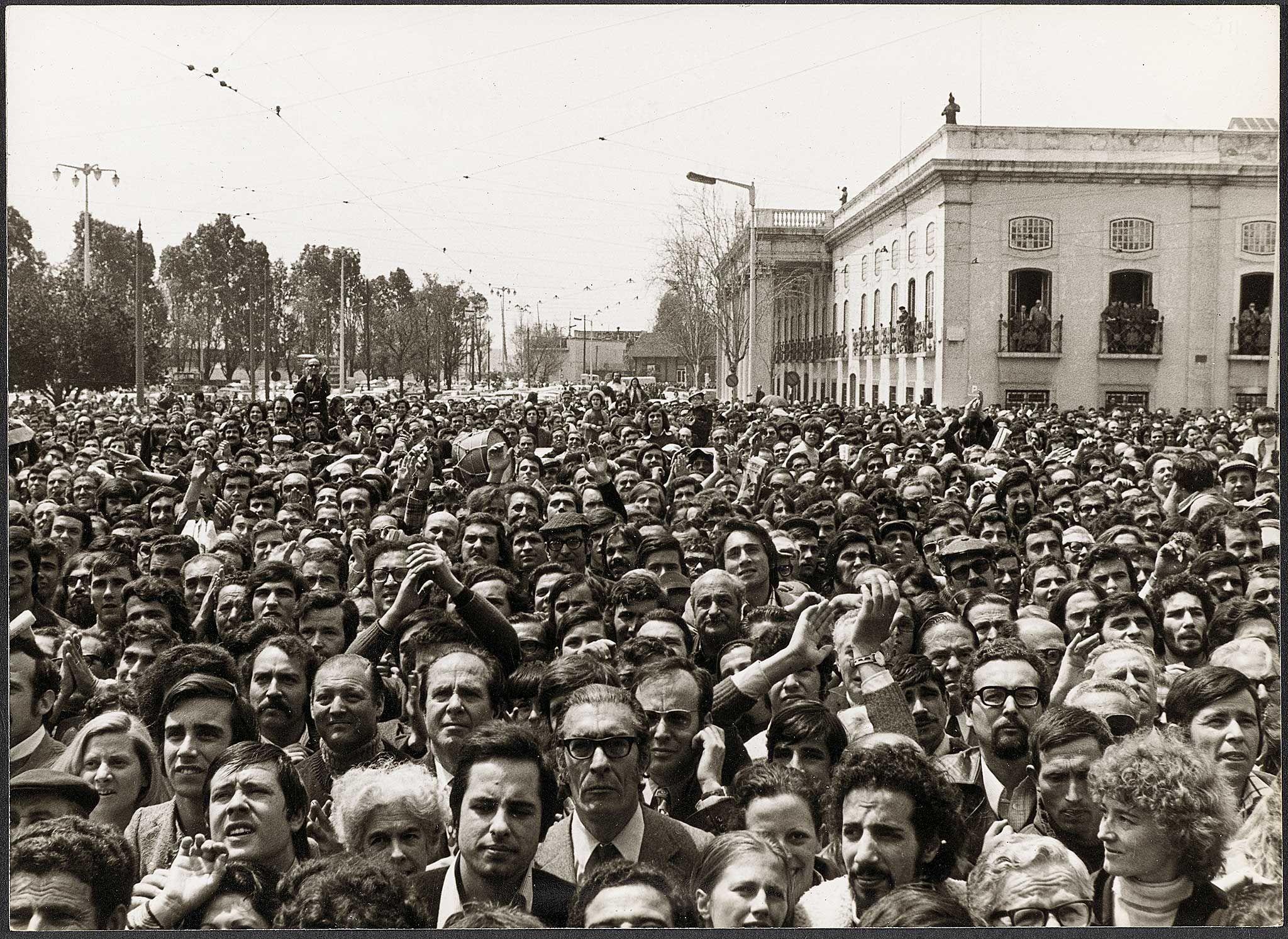
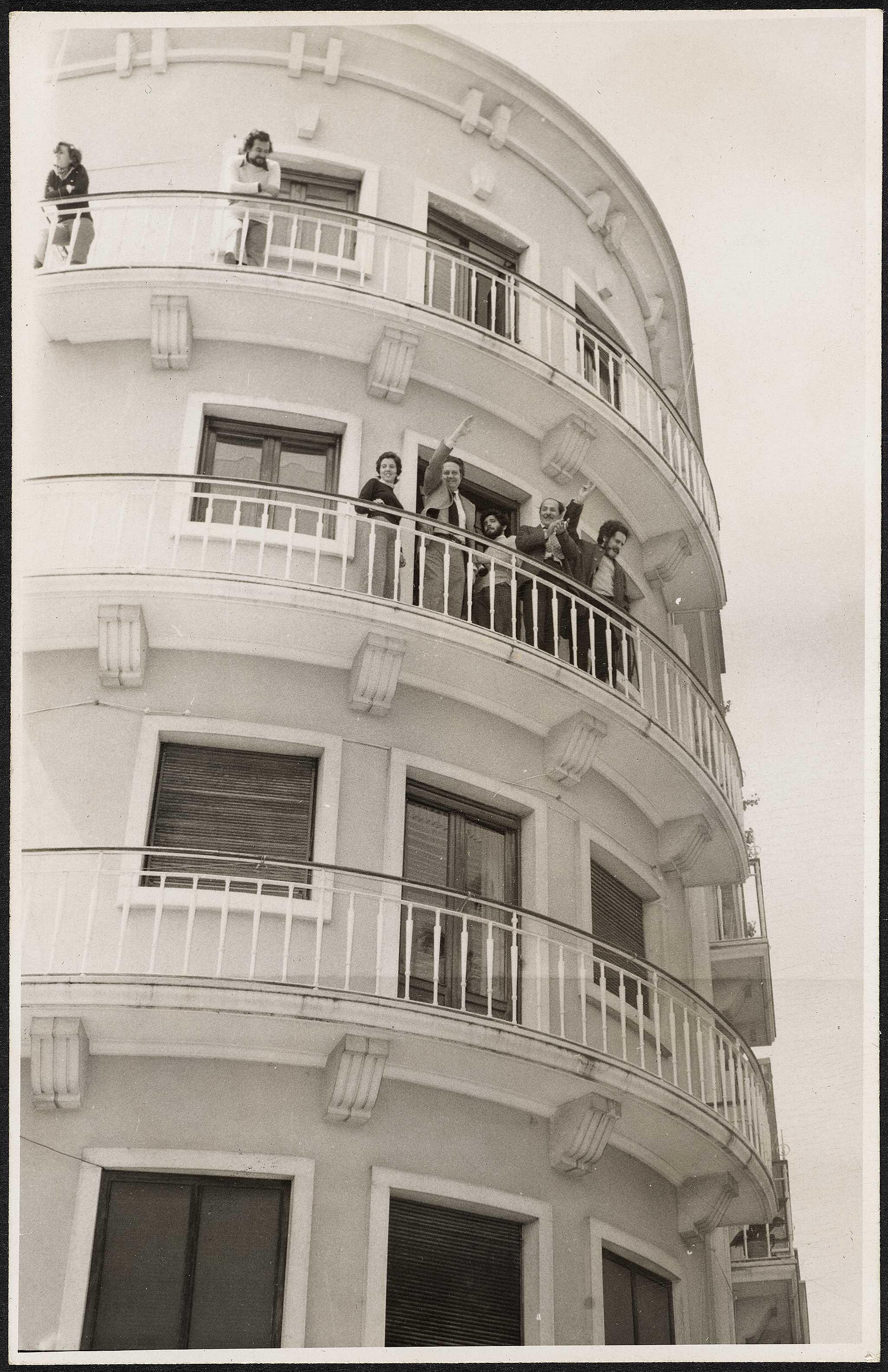
(…) The train had now become the train of freedom. It stopped almost everywhere, in major towns and villages and even in Alfarelos, Ramos da Costa’s birthplace near Coimbra. There, as elsewhere, immense crowds awaited us: the radio had announced our passage, inviting people to come and greet us. At one point, a journalist boarded and handed me that morning’s newspaper: it was thus that I read, for the first time, the Programme of the Armed Forces Movement.”
International recognition of the Revolution
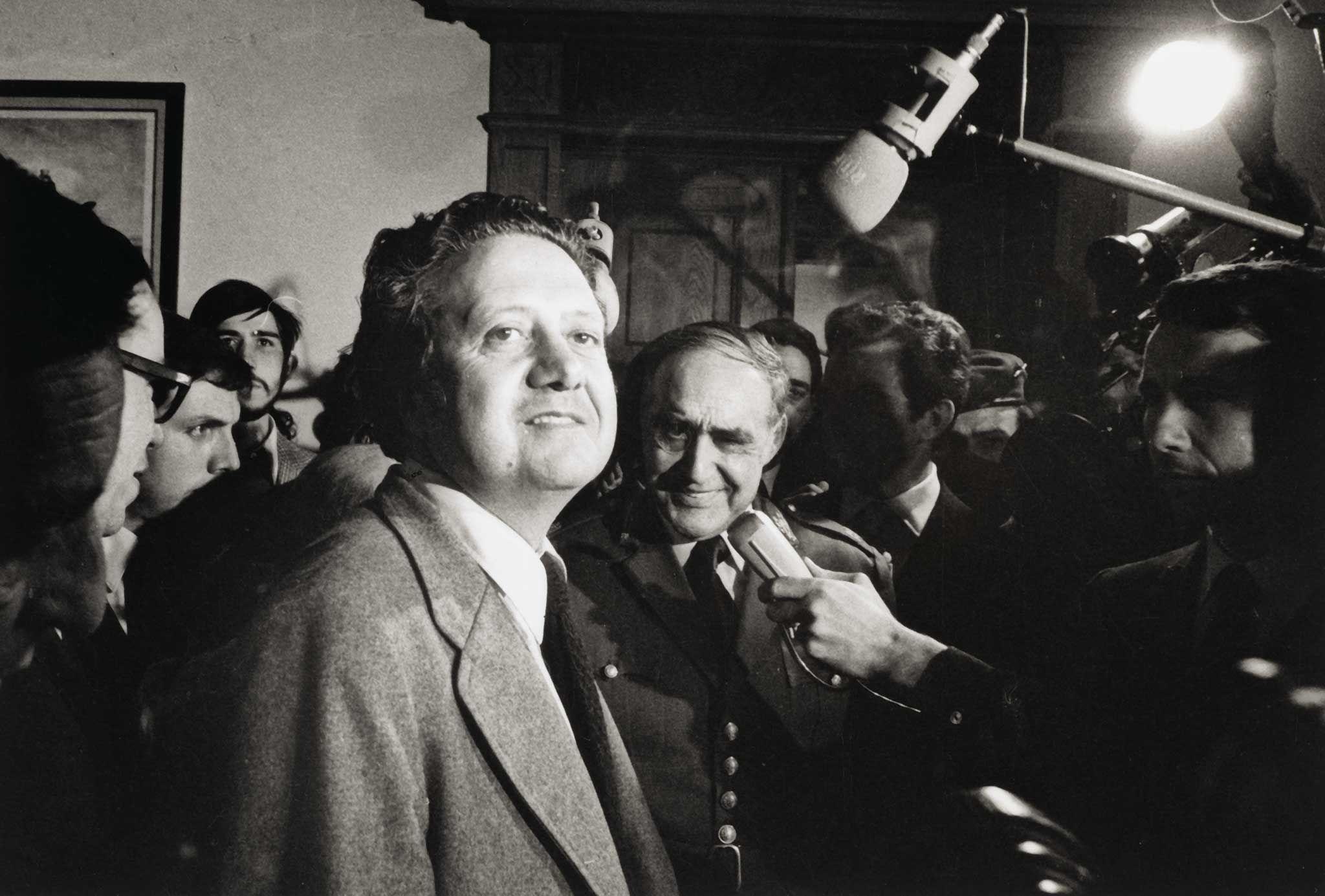
“When we arrived at the palace [Cova da Moura], we were again faced with a crowd. Dozens of military I was seeing for the first time, but also familiar faces, both military and civilian: socialists, members of the Freemasonry, old republicans, some communists… Spínola appeared. We embraced spontaneously and moments later he invited me into his office. ‘The revolution is accomplished. I am pleased to receive you’ — these were his first words. He soon told me what he expected of me: ‘The Revolution urgently needs international recognition. We must act quickly. You have many connections in Europe and around the world. You are the man who will open doors for us. I am counting on you…’”
Meeting Cunhal at the airport
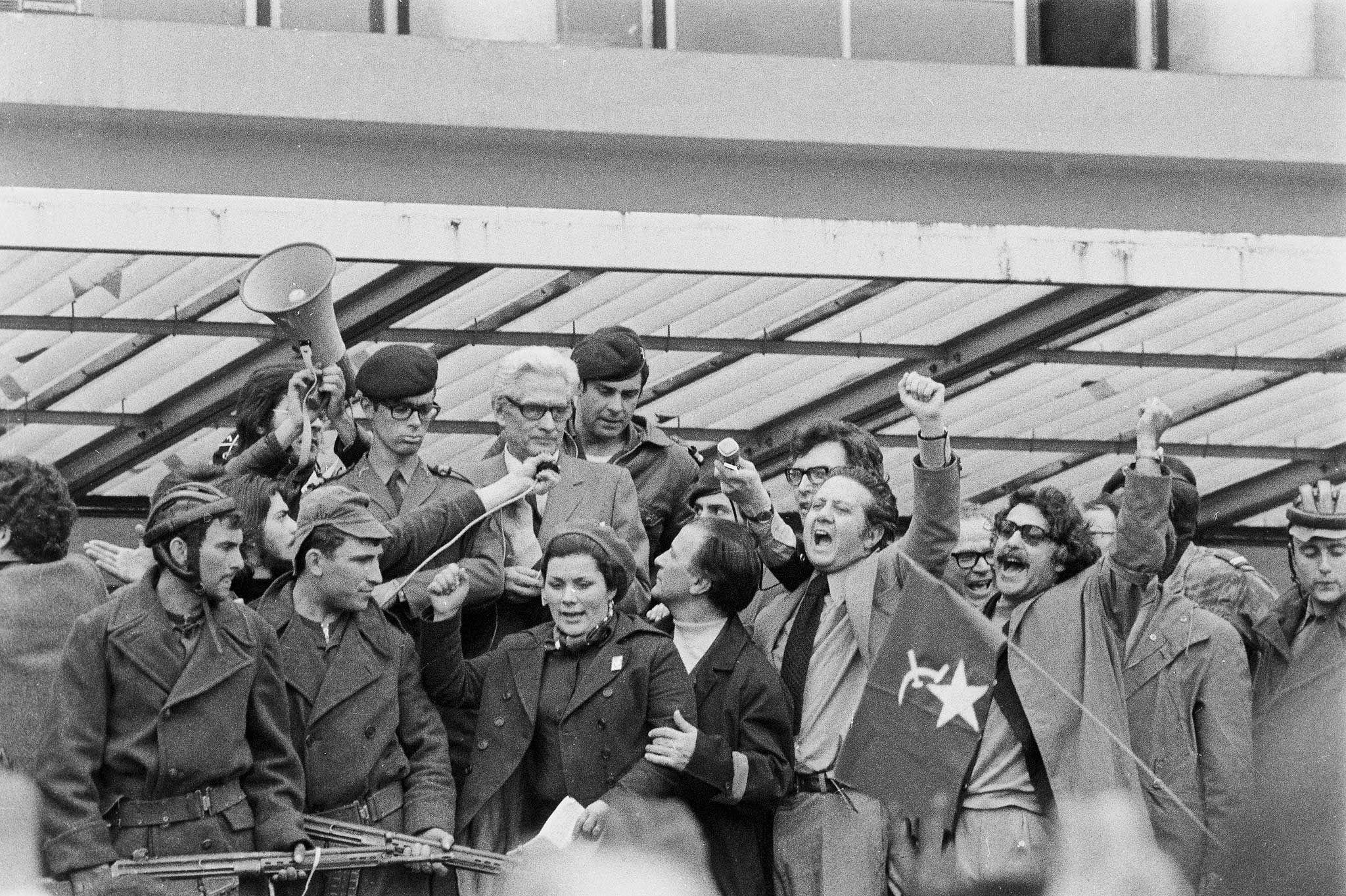
“I went to meet him at the airport. He made a strong impression on me: rigid, cold, distrustful. His return, however, showed clearly how quickly the situation had evolved: PCP [Portuguese Communist Party] militants carried their flags; they would now have their own public headquarters. The communist was no longer the enemy to be defeated. Álvaro Cunhal seemed intent on projecting strength from the outset. His first contacts with the press were rather harsh; then, outside, he climbed onto an armoured vehicle to greet his comrades.”
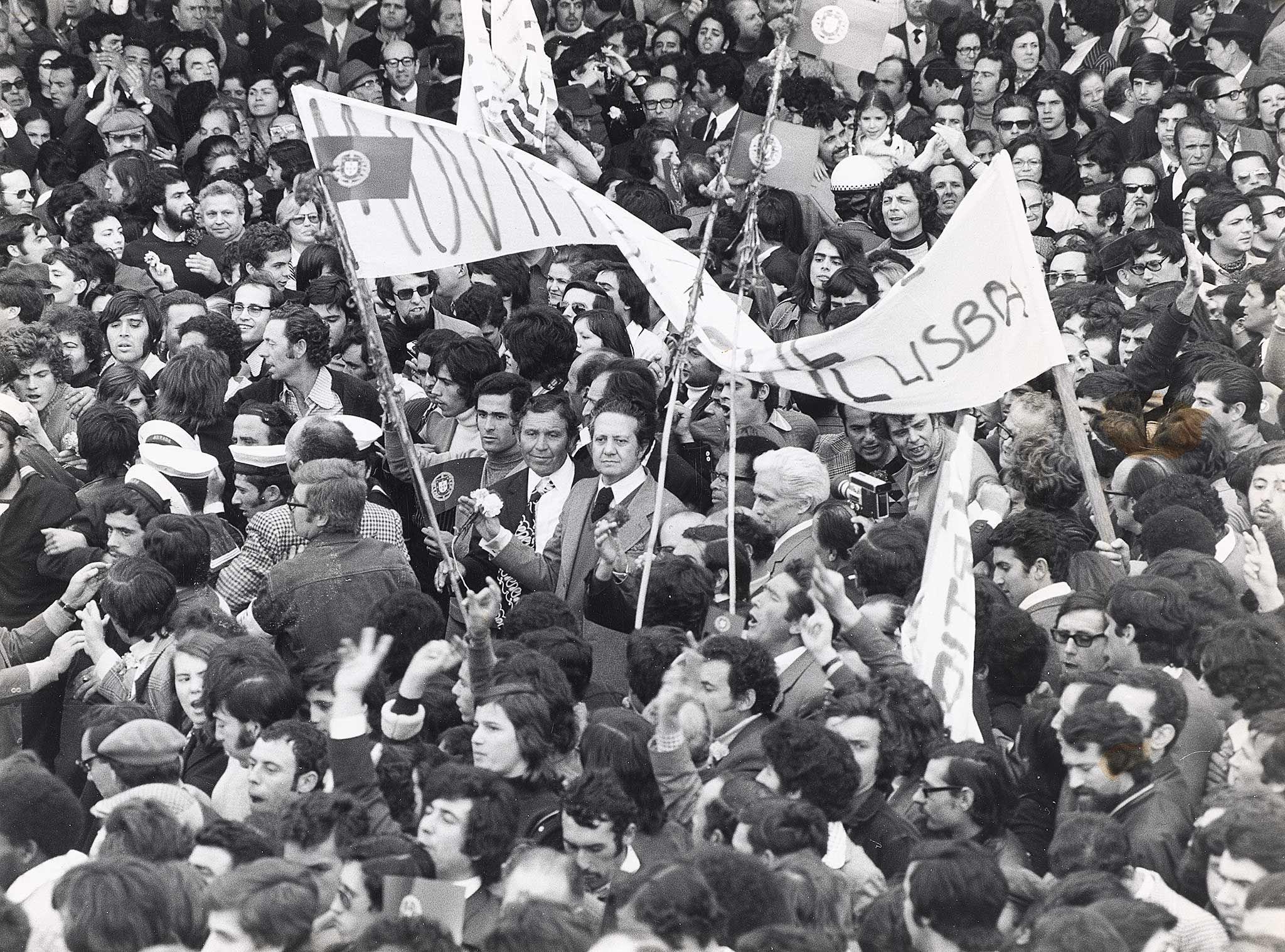
May Day 1974
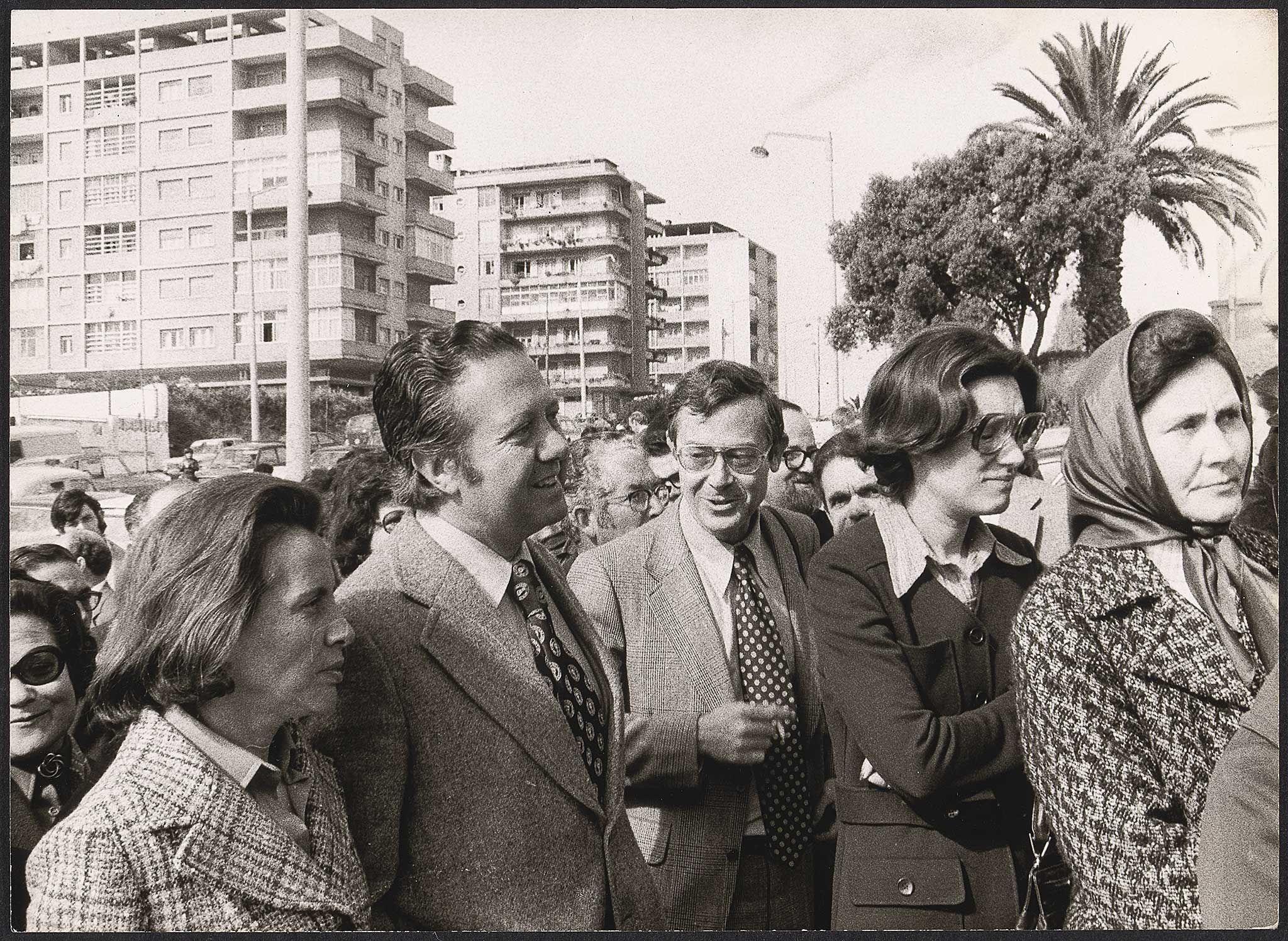
“A great celebration, a festival of fraternity. I was with my socialist friends. We had organised ourselves to march together. Some communists approached me and said: ‘You should go at the front, beside comrade Cunhal.’ Seeing no inconvenience, I agreed. I placed myself at his side, amid popular jubilation. At the stadium, we were invited onto the platform. I then asked the organisers, the trade unionists, how the speeches would be arranged. One replied: ‘Only four speakers are planned, including yourself, of course. Cunhal will speak last.’ I asked: ‘Why Cunhal last?’ They answered: ‘Because he is the oldest!’ That great popular gathering was the only one we held together.”
The end of an Empire
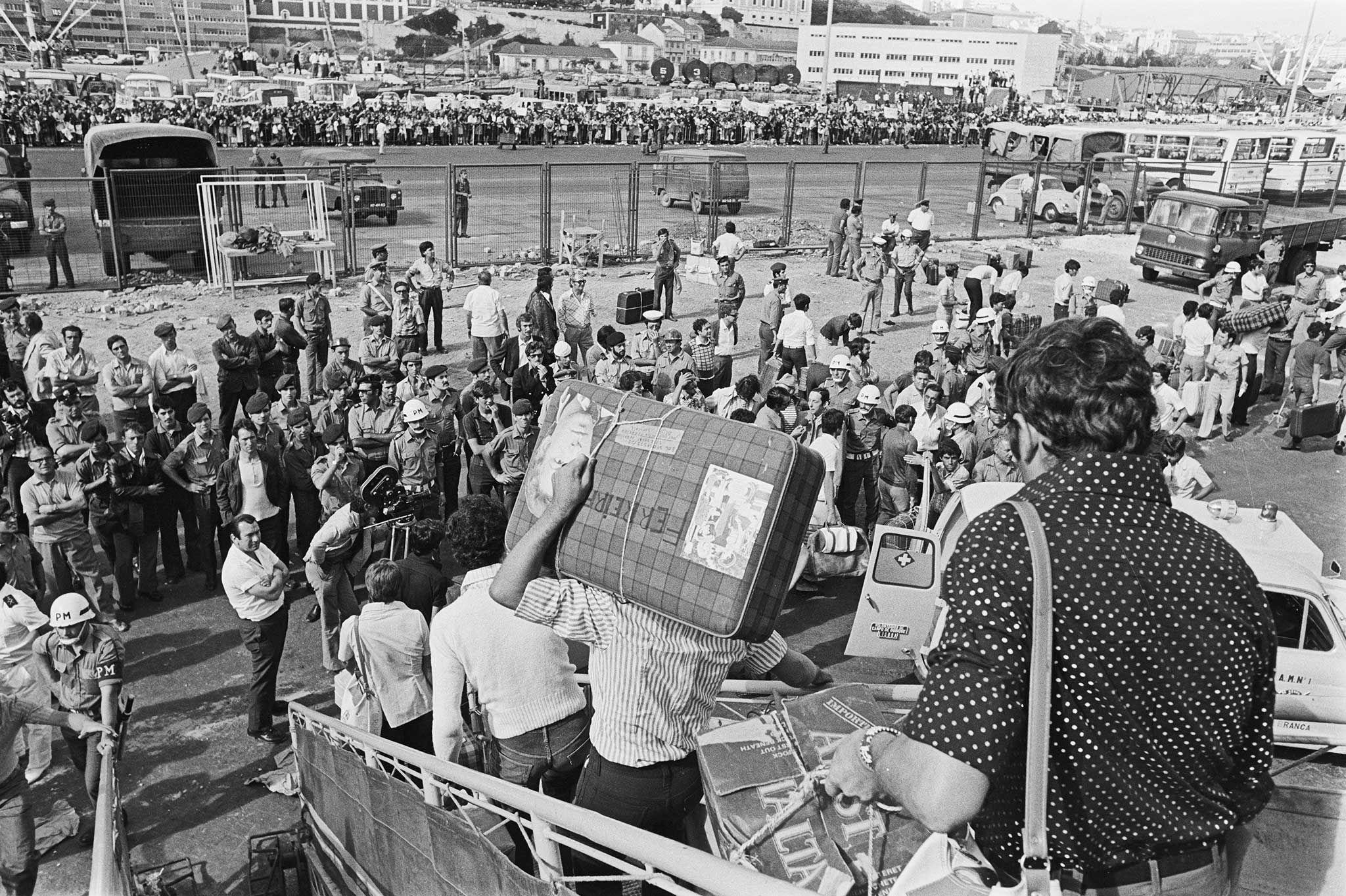
“The path we embarked upon was the only realistic one. Throughout this period, decolonisation was rapid and peaceful. It must be remembered that we approached decolonisation under the worst conditions, after fourteen years of a war that had been militarily lost, as our troops refused to fight any longer. Moreover, we had no room for manoeuvre to negotiate. Decades of fascist colonial policy had left populations unable to adapt to a new situation.”
A convinced European
“I am a convinced European, a supporter of a Europe of the possible. De Gaulle saw very far, or very high, encompassing the whole continent in a single vision, from the Urals to the Atlantic. Let us be less ambitious: we have built a community that must grow and expand. Confident in its own dynamism, it can move towards a socialism that will naturally differ from those we know today, remaining faithful to its traditions of humanism and freedom. This is the historical movement into which the Portuguese people must integrate.
We are still, of course, at the tail of Europe, but from it comes the essence of our identity: a civilisation, a culture, a system of references, habits, aspirations, motivations, and even a standard of living that we seek to share.”
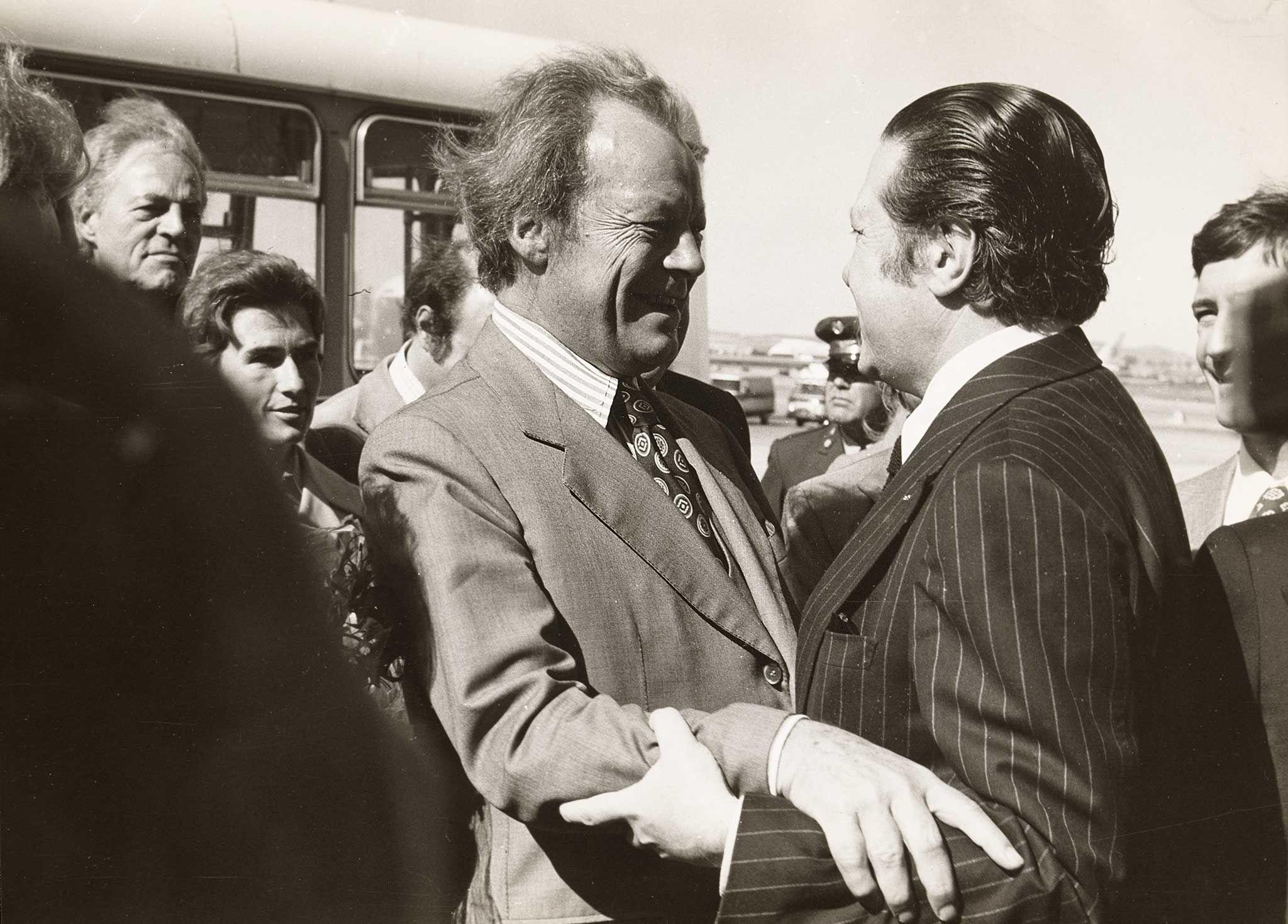
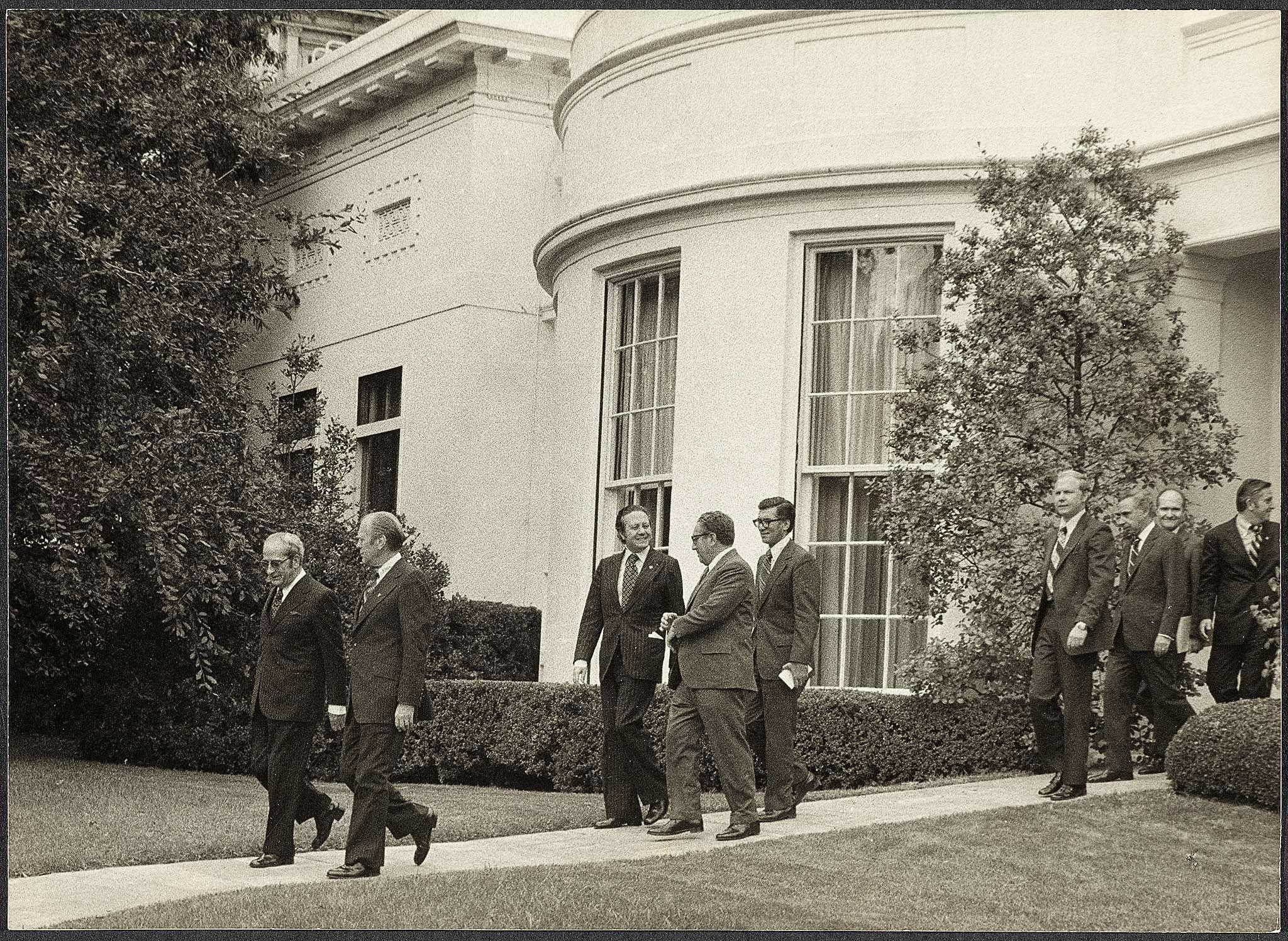
Minister of Foreign Affairs
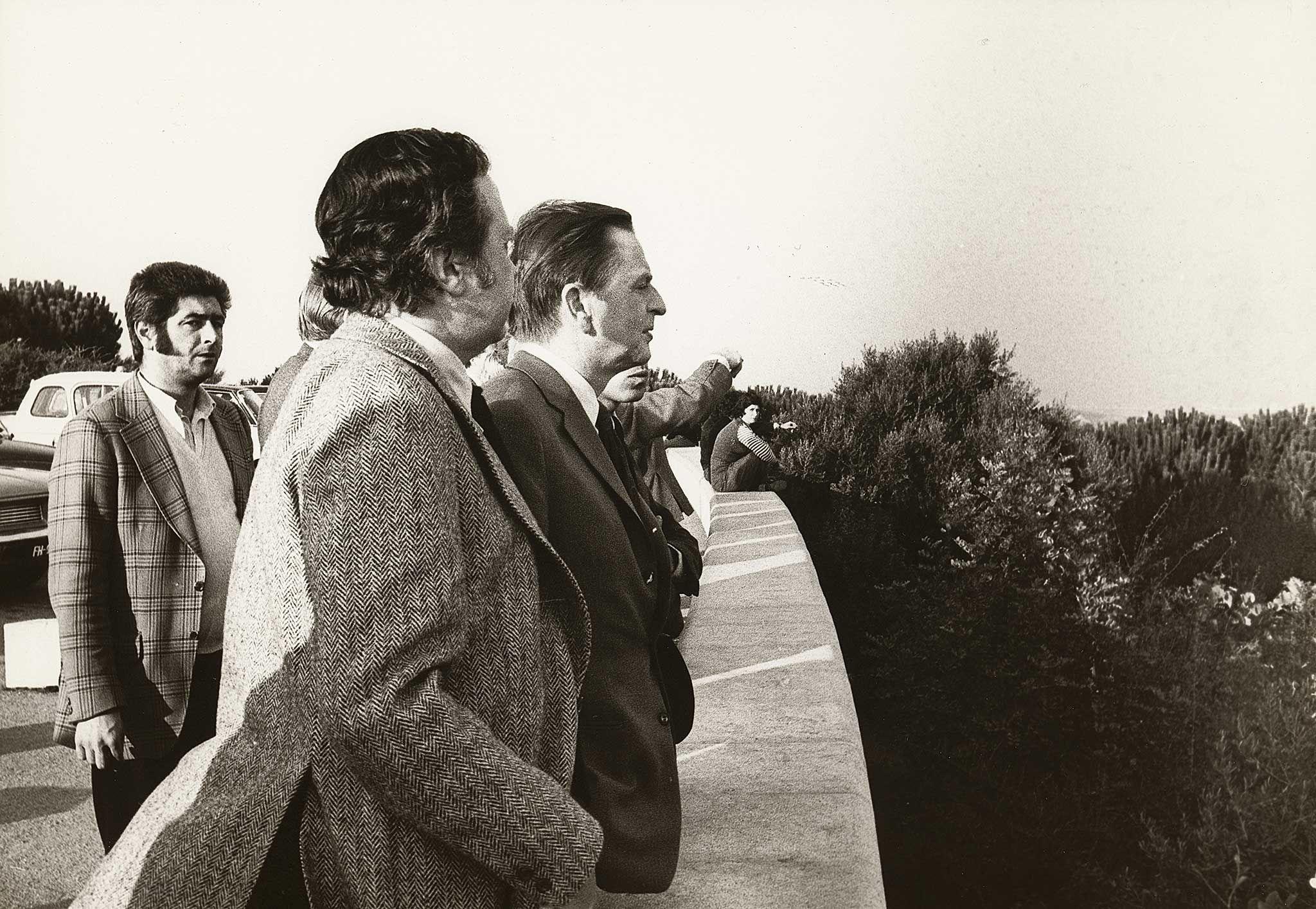
“My only regret when I left the Ministry of Foreign Affairs was not having succeeded in establishing diplomatic relations with Beijing. (…)
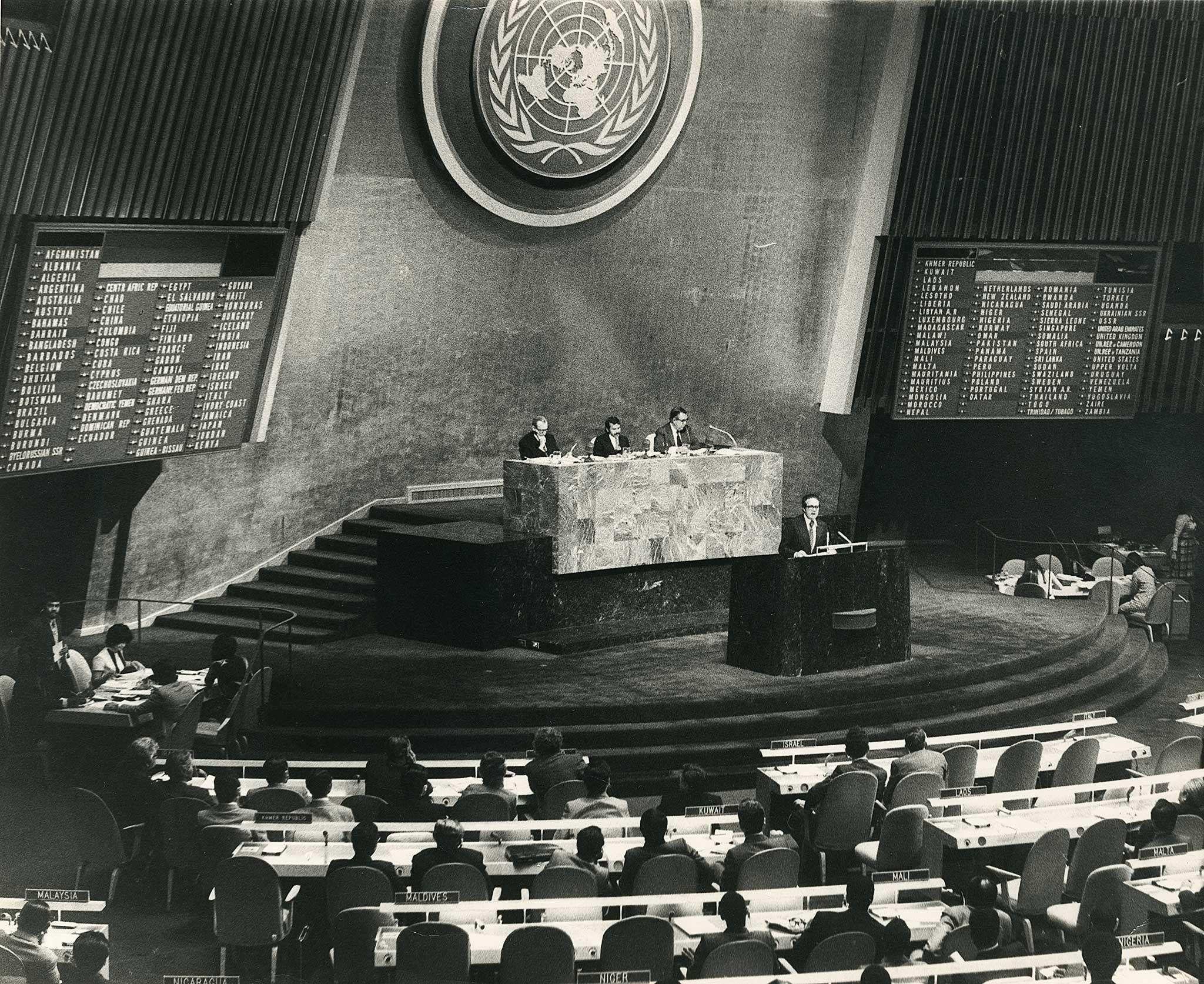
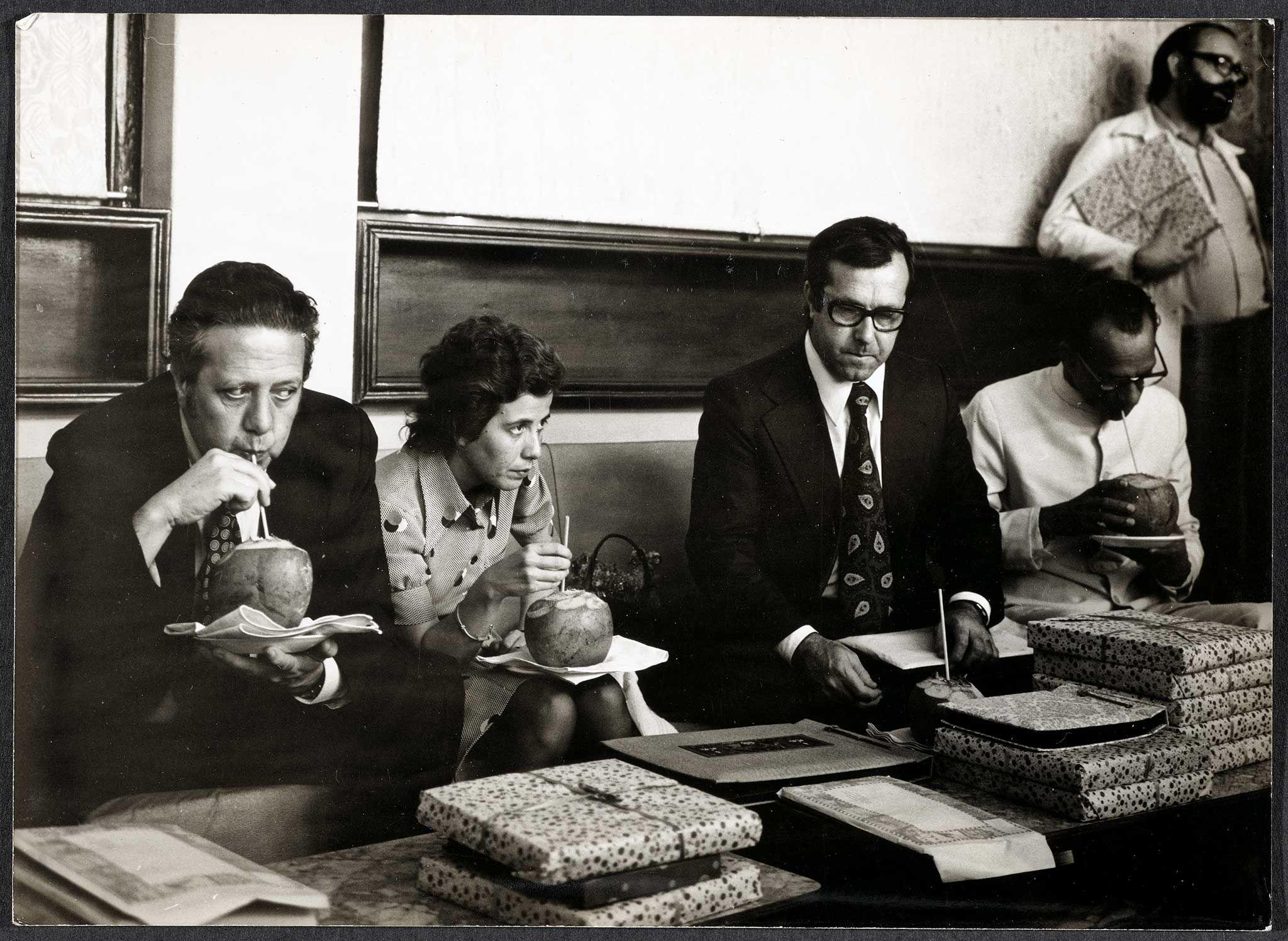
I was the architect of the opening to the East and always advocated the expansion and diversification of our relations with communist countries and with countries of the Third World - Asian, Arab and African. My official visits to the Soviet Union, Yugoslavia and Romania, as well as to Third World countries such as Tunisia, Libya, Somalia and India, contributed greatly to this, and I am pleased that it was so.”
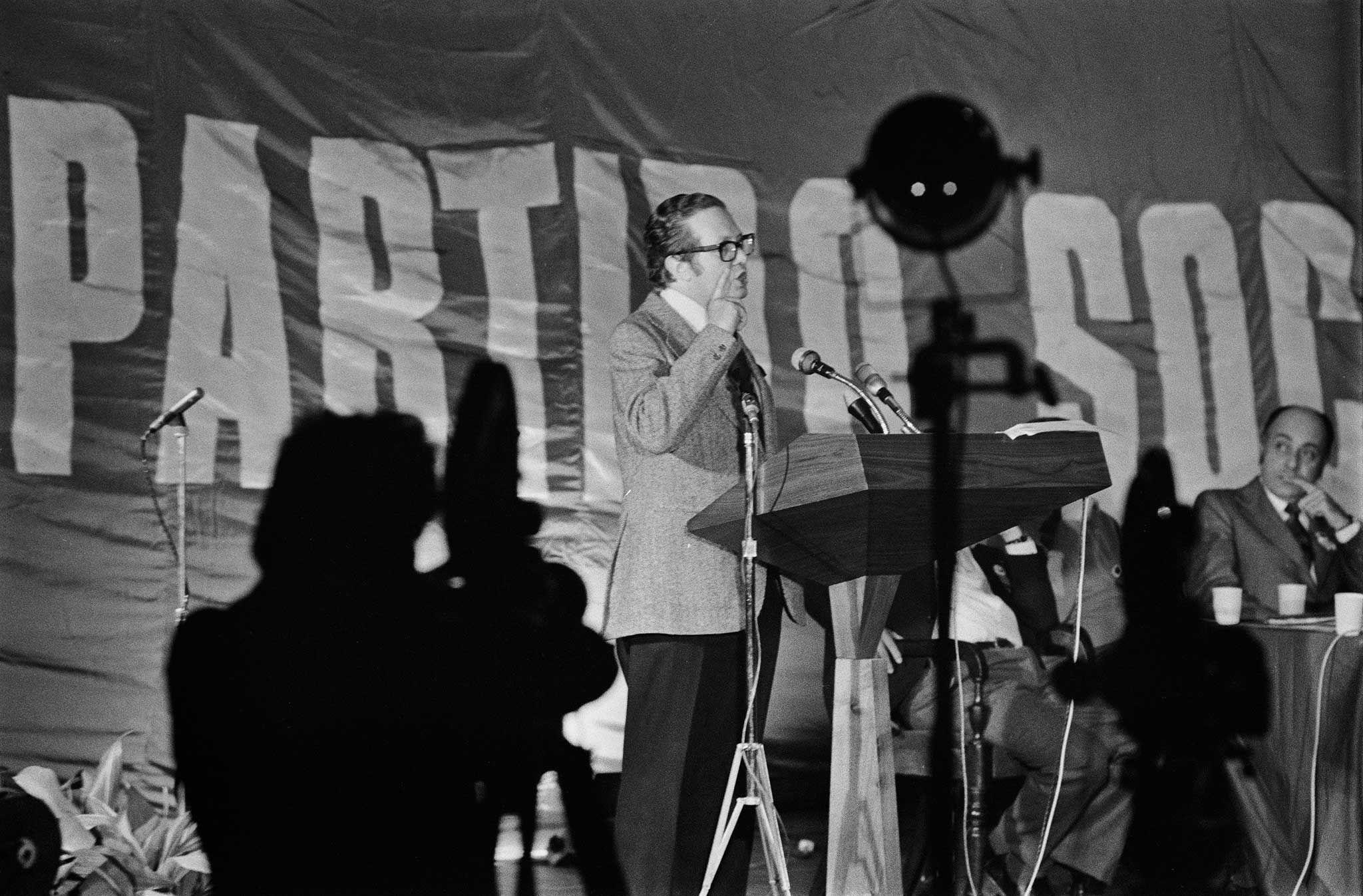
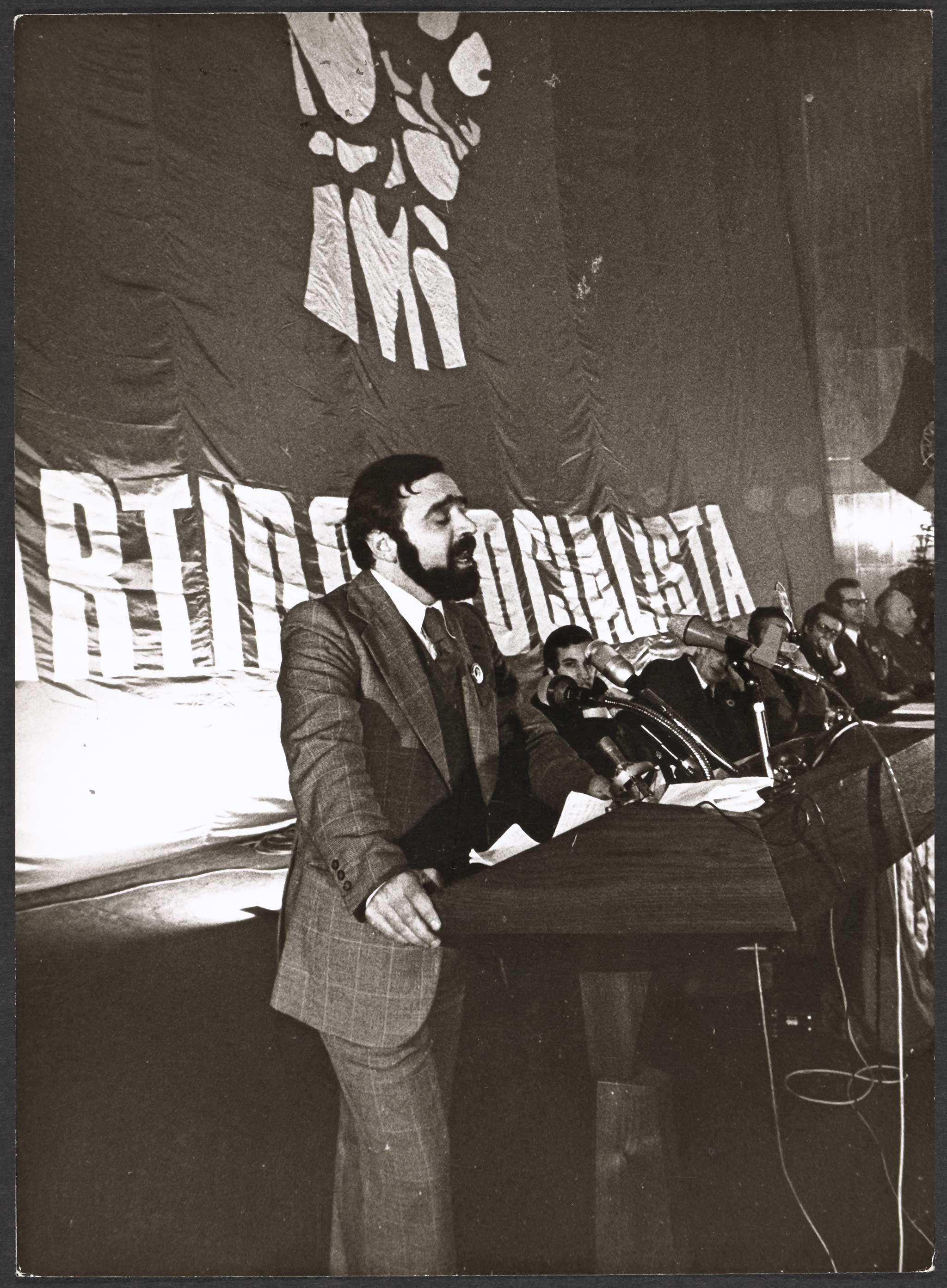
The Socialist Party and its first congress
“Hundreds, thousands, many thousands of people arrived from all over, joined and registered in the Party, without any possibility of control. In this way, the Party took shape and became institutionalised throughout Portugal. The congress was thus an opportunity to give it a structure, solid vertebrae, a head and shoulders.
I sensed, from the very first day of the Congress, that a underhand coup was being prepared in the shadows: those responsible for maintaining order were hostile to us, and much of the audience reacted no less unfavourably. (…) Two lists were presented for the National Commission: one from the ‘Serra clan’; the other backed by the former leadership. The battle had begun.
(…) The Serra operation failed, but the Party was left in a state of shock, despite the fervent calls for unity from both sides at the end of the Congress, despite the embraces and general euphoria.”
The Alvor Agreements and the independence of Angola
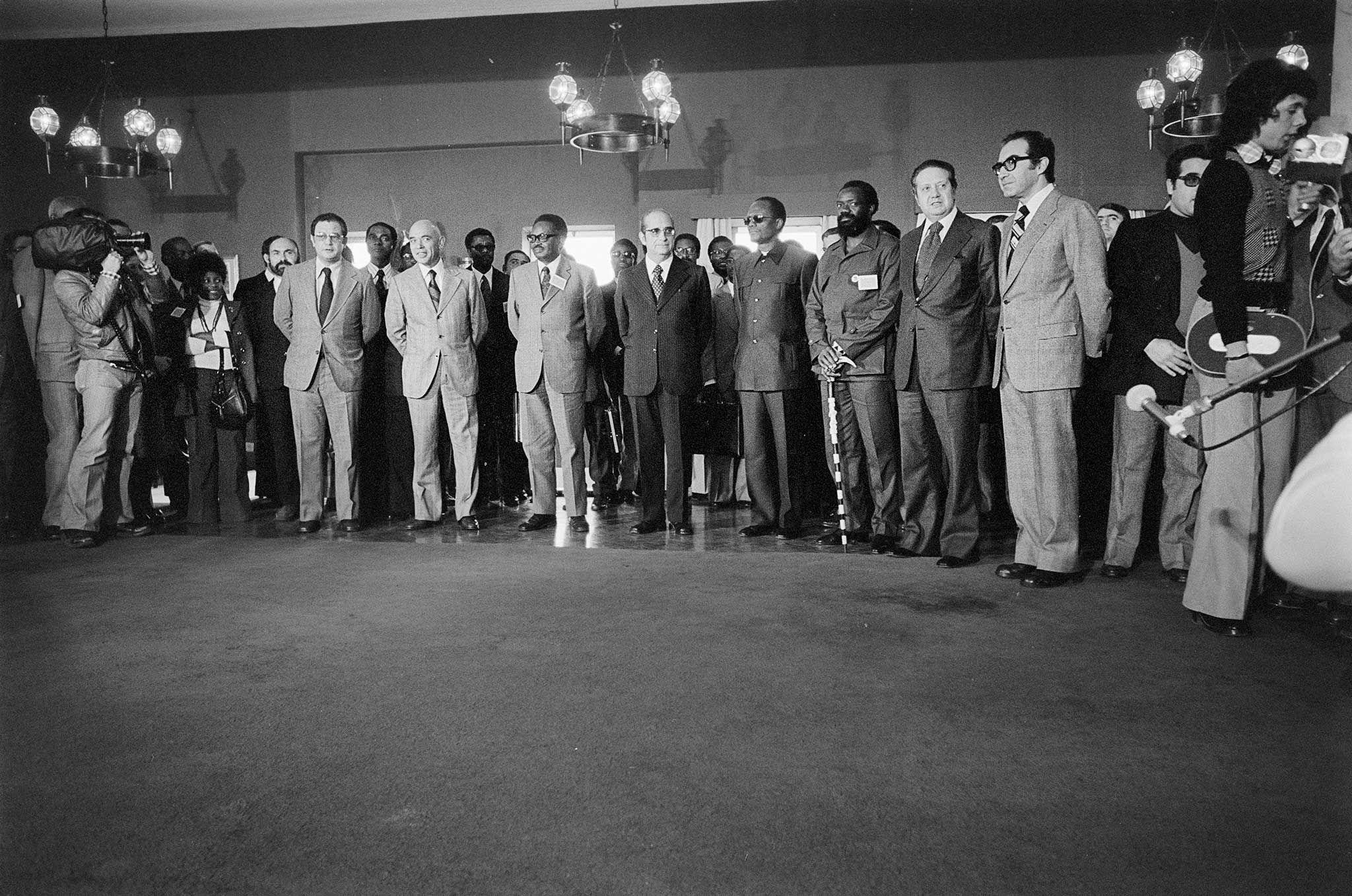
“The Alvor Agreements, with the three Angolan movements, establishing Angola’s independence, were signed in January 1975 by Almeida Santos, Melo Antunes and myself. On the Angolan side, by Jonas Savimbi, Agostinho Neto and Holden Roberto, leaders of the three nationalist movements: UNITA, MPLA and FNLA. These agreements set out the terms of independence. The last Portuguese soldier was to leave Angolan territory before 11 November 1975.”
Against trade union unity
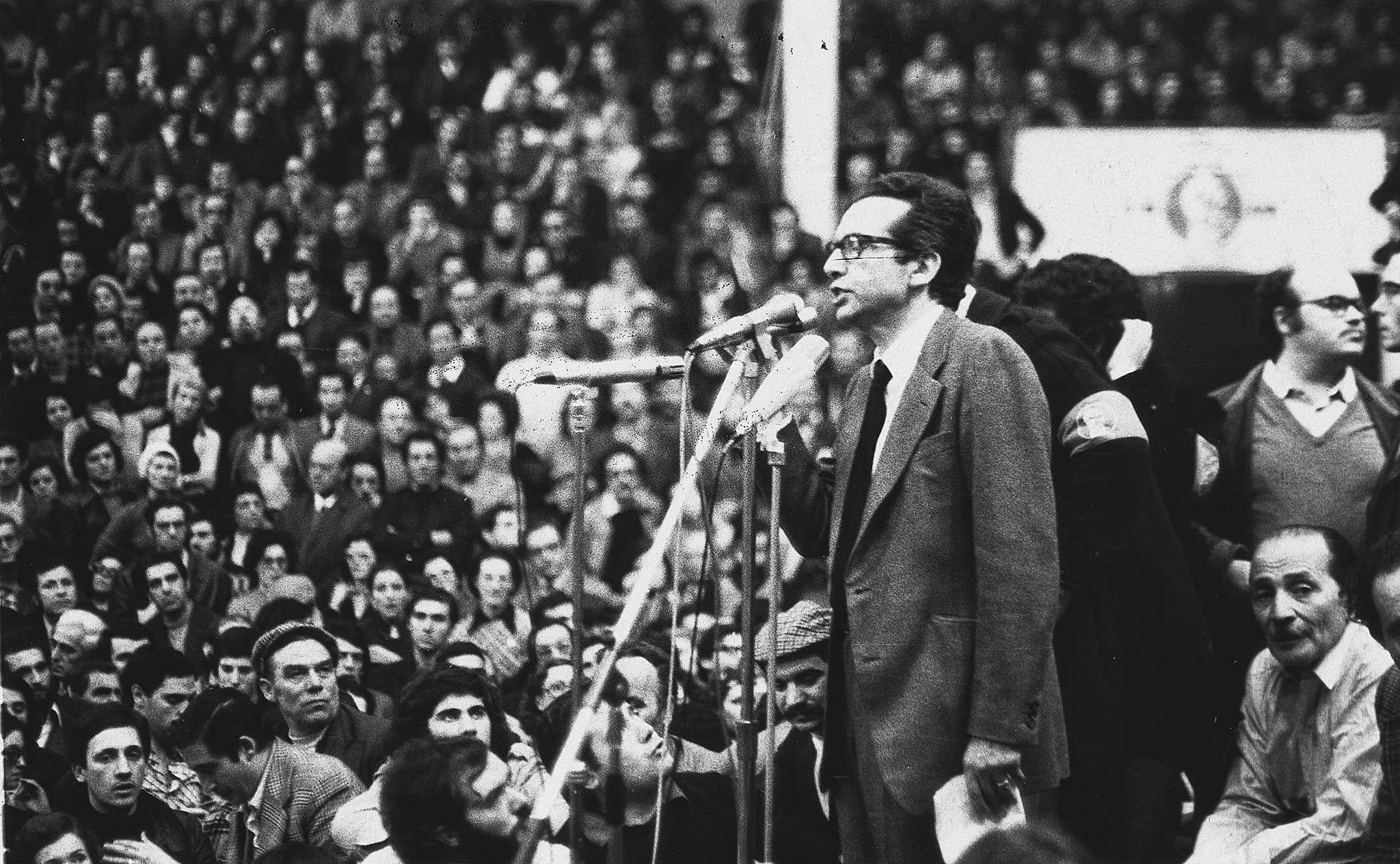
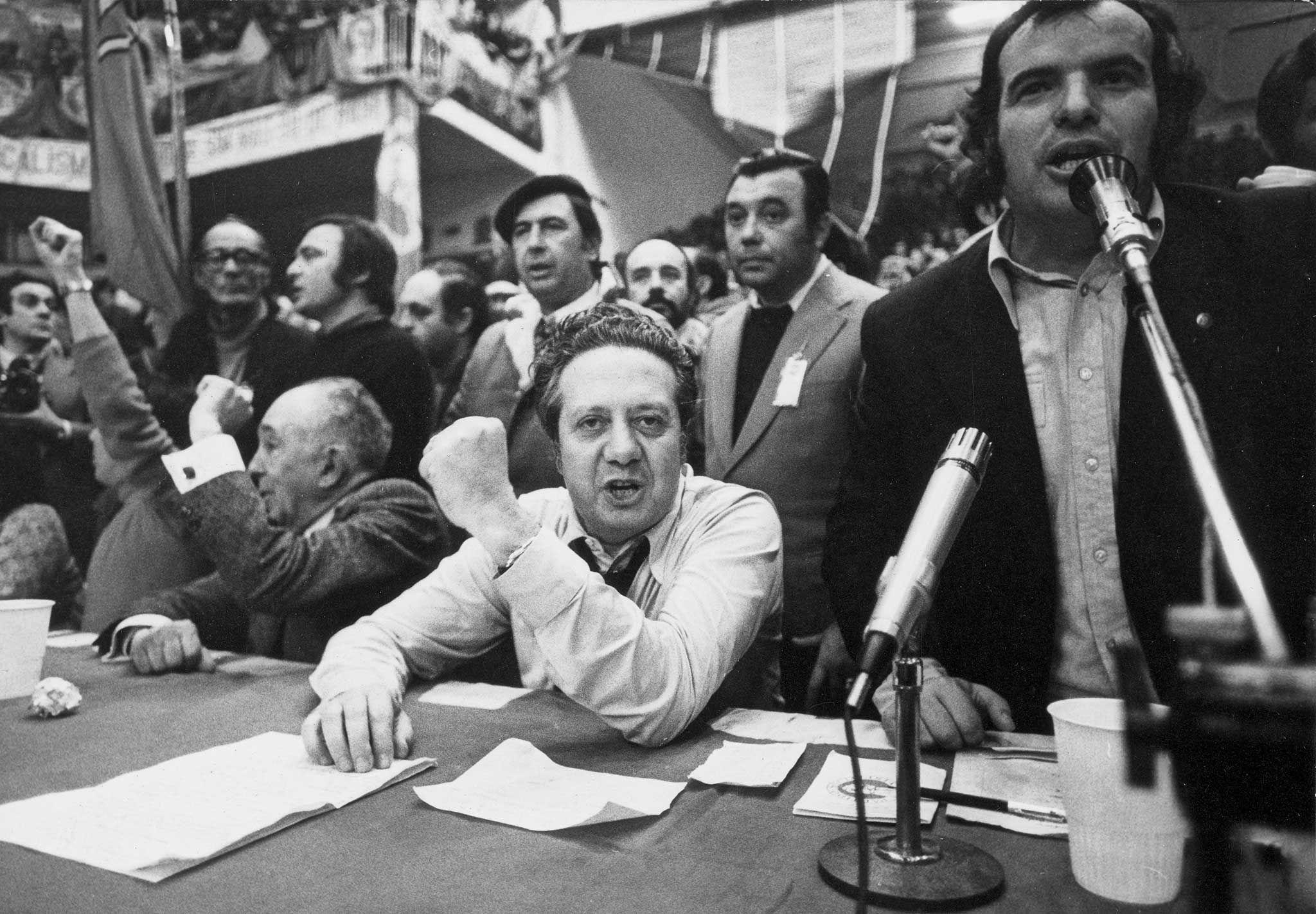
“The real battle began a few weeks later, when Cunhal and his allies sought to impose their views on trade union organisation. We opposed the idea of a single union, which they wanted enshrined in law.
(…) Zenha wrote a scathing article in Diário de Notícias, which prompted an immediate response from the Communist Party. (…) We then organised a major Socialist Party rally in Lisbon. A memorable night: we dismantled the operation and denounced the blatant ‘intoxication’ by the communists.”
The first free elections
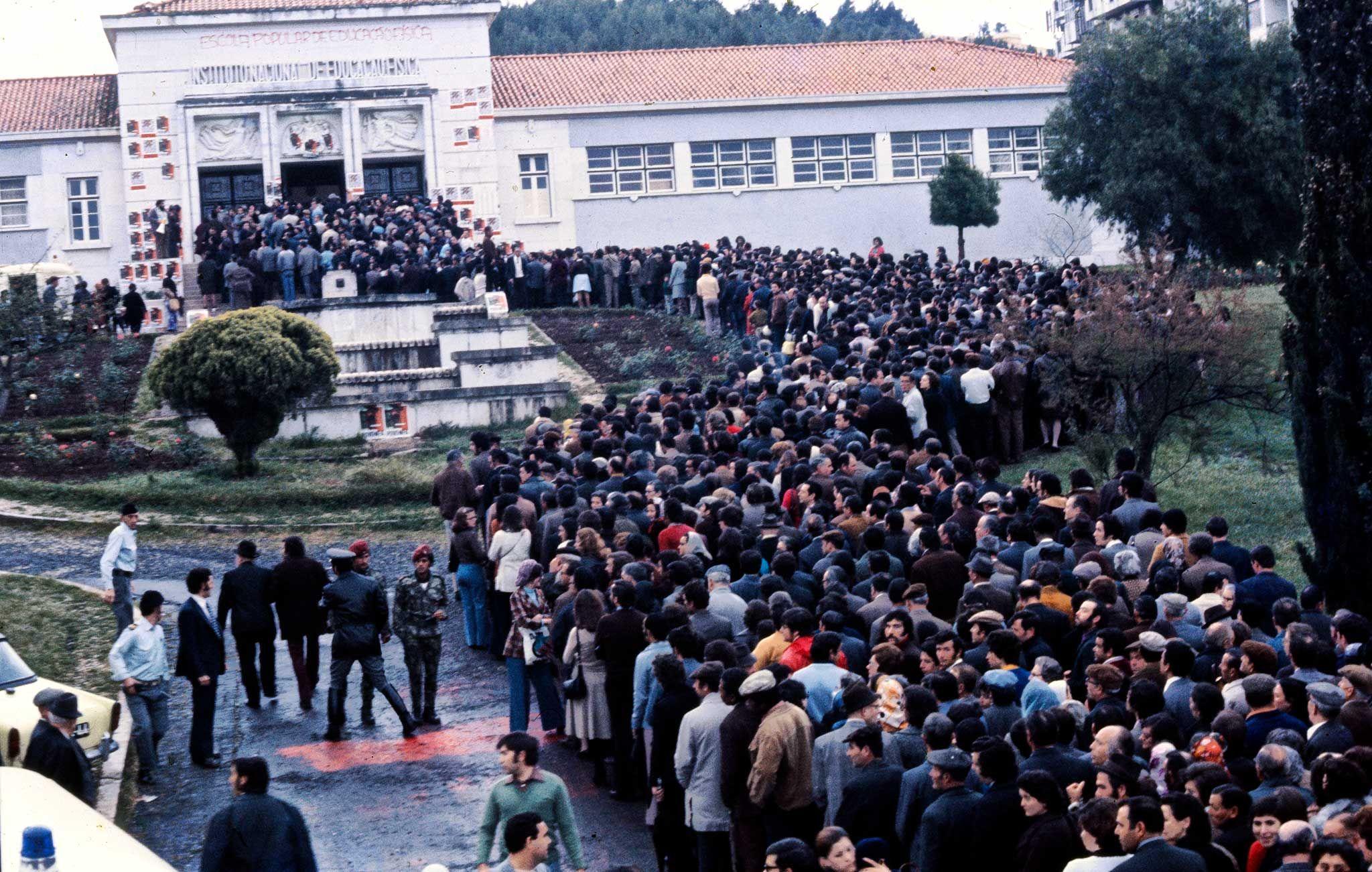
“What remains engraved in my memory is the image of endless queues at polling stations. From six in the morning, from Minho to the Algarve, workers and peasants, traders and artisans waited, by the thousands, in remarkable order, for the moment to exercise their destiny. A plebiscite in favour of democracy that no one wished to miss: in the North, peasants sometimes walked for hours from distant villages to the school where they voted; elderly people with trembling hands placed, for the first time, a ballot into the box, proud to bury forty-eight years of fascist dictatorship in a single instant; the sick, brought in ambulances, voted under the anxious gaze of a nurse… It was an entire people who, on that day, demonstrated their civic spirit and their enthusiasm for democracy.”
May Day 1975
“From the outset, manoeuvres began: the PPD [Popular Democratic Party] march was practically prevented from assembling and the Socialist Party relegated to the rear, while the communists filled the stadium with their forces. In the stands and on the field, only their flags could be seen. When our march finally arrived, very late, they tried to block it on the pretext that the venue was full. Worse still, an Intersindical [Trade Union Confederation] official personally prevented me from accessing the platform where Cunhal, without hesitation, greeted the crowd with raised arms!
The objective was clear: to show the military, political opponents and everyone else that the elections had changed nothing and that ‘their’ revolution continued as before. (…) This time, the communists had gone too far. Playing with fire, they had brought the masses into the streets. Against them. At our call, on 2 May, an immense crowd marched up Avenida da Liberdade [Liberty Avenue], shouting only one thing: ‘The popular will must be respected.’”
The República newspaper case
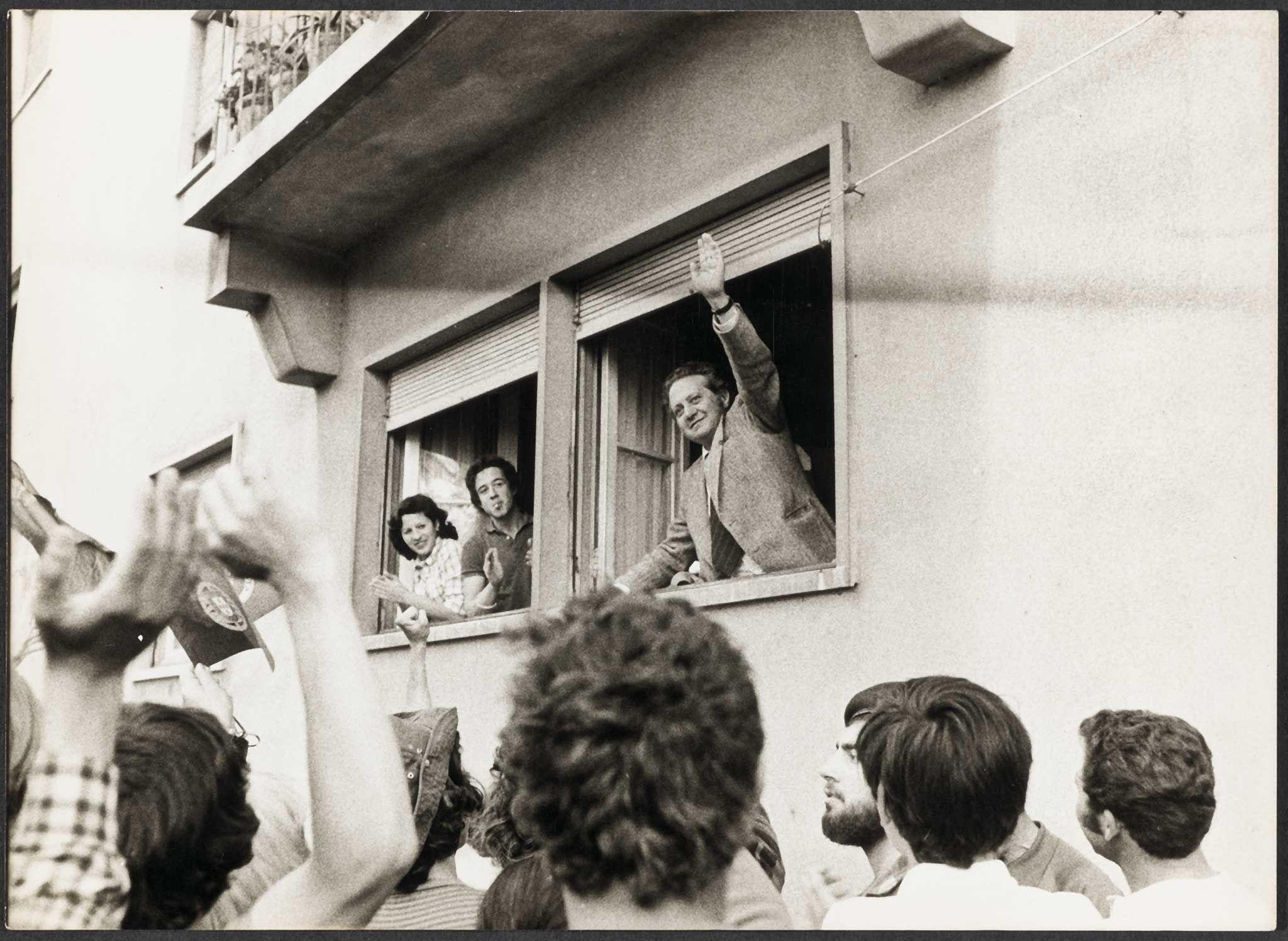
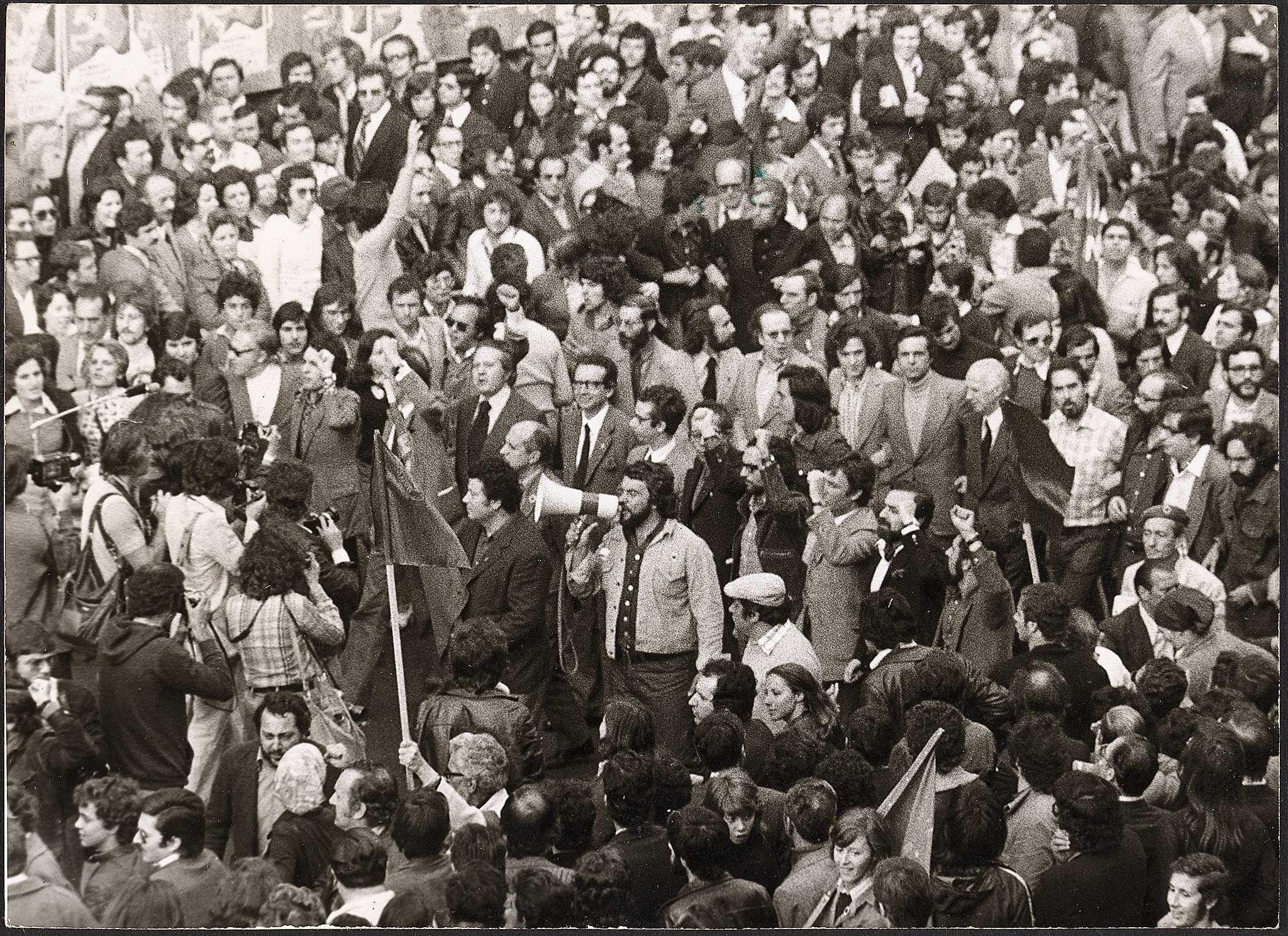
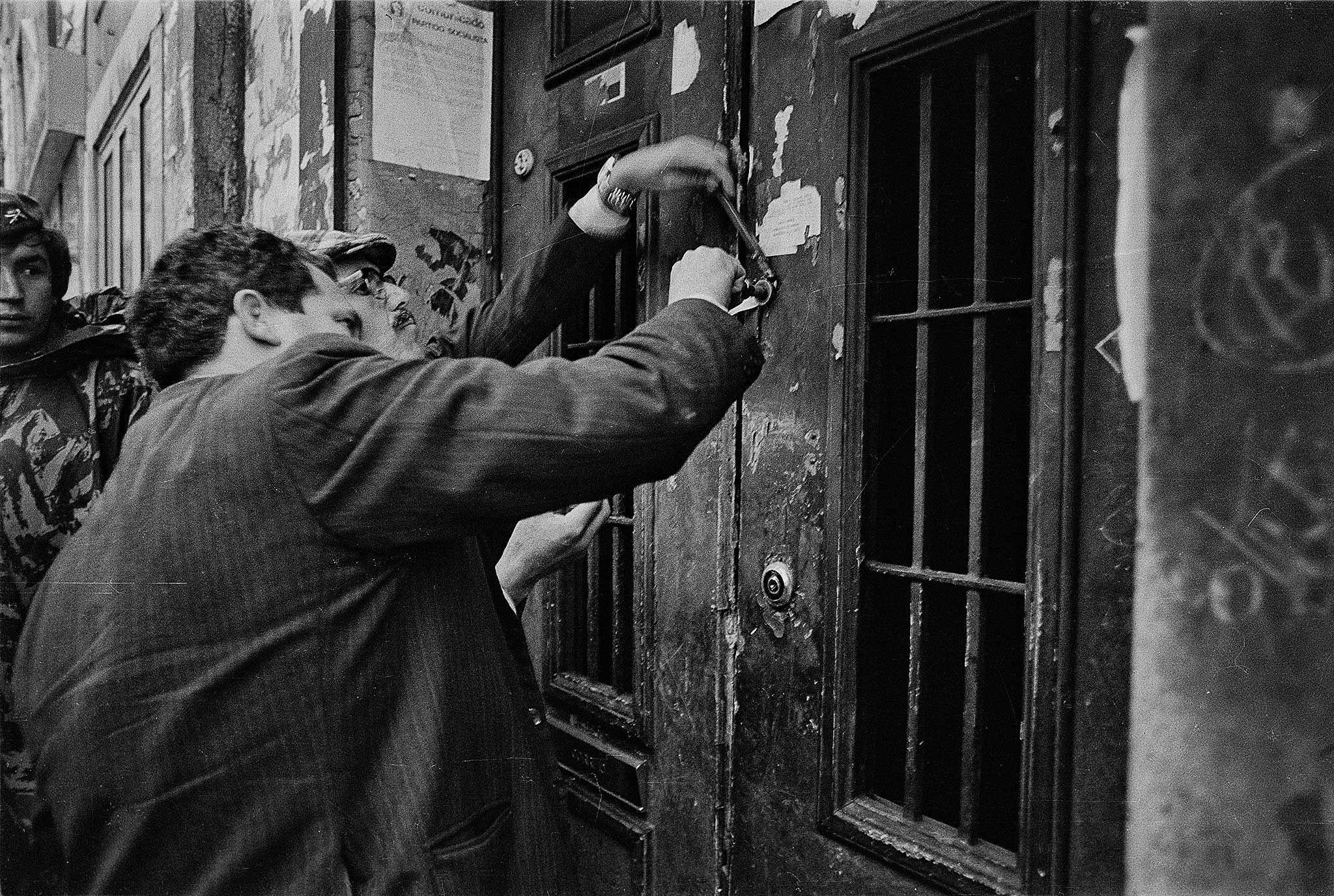
“República was occupied by leftists and communists. The journalists were socialists, and the paper belonged to a cooperative linked to them. For a day and a night, we supported, from the street, the socialist journalists held hostage by self-proclaimed ‘revolutionary workers’. The military intervened and closed the paper. But closing República meant silencing and killing it. Zenha and I, the only socialists in government, both resigned.”
The Fonte Luminosa rally
“The Prime Minister, the day after the speech, appeared impassive, as if nothing had happened. The Portuguese people had told him to leave: ‘Out with Vasco!’ shouted thousands upon thousands. But he clung to power with a determination that defied all expectations… It was to no avail. His role in the Portuguese Revolution ended that day — at the historic demonstration at Fonte Luminosa.”
The Hot Summer of 1975
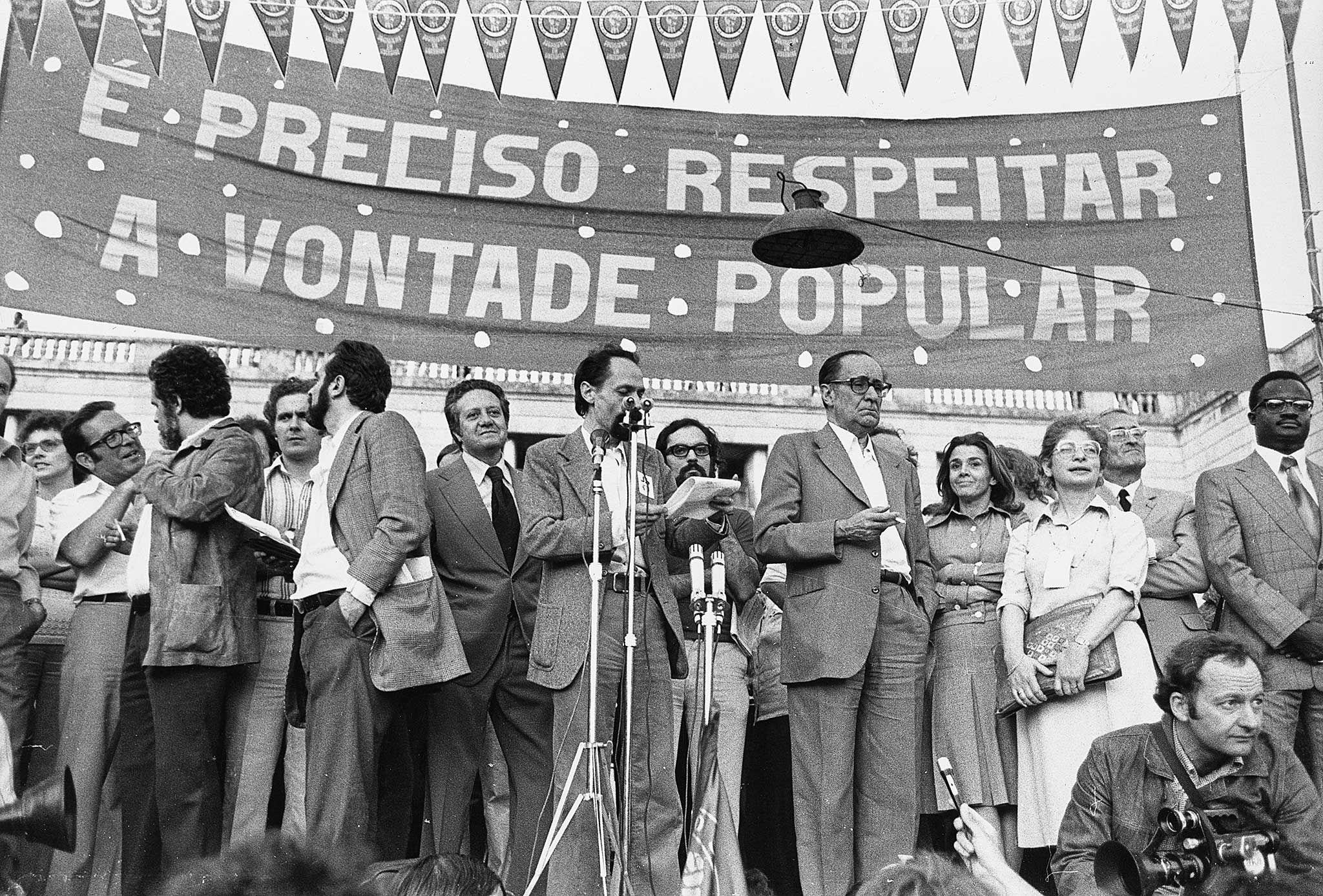
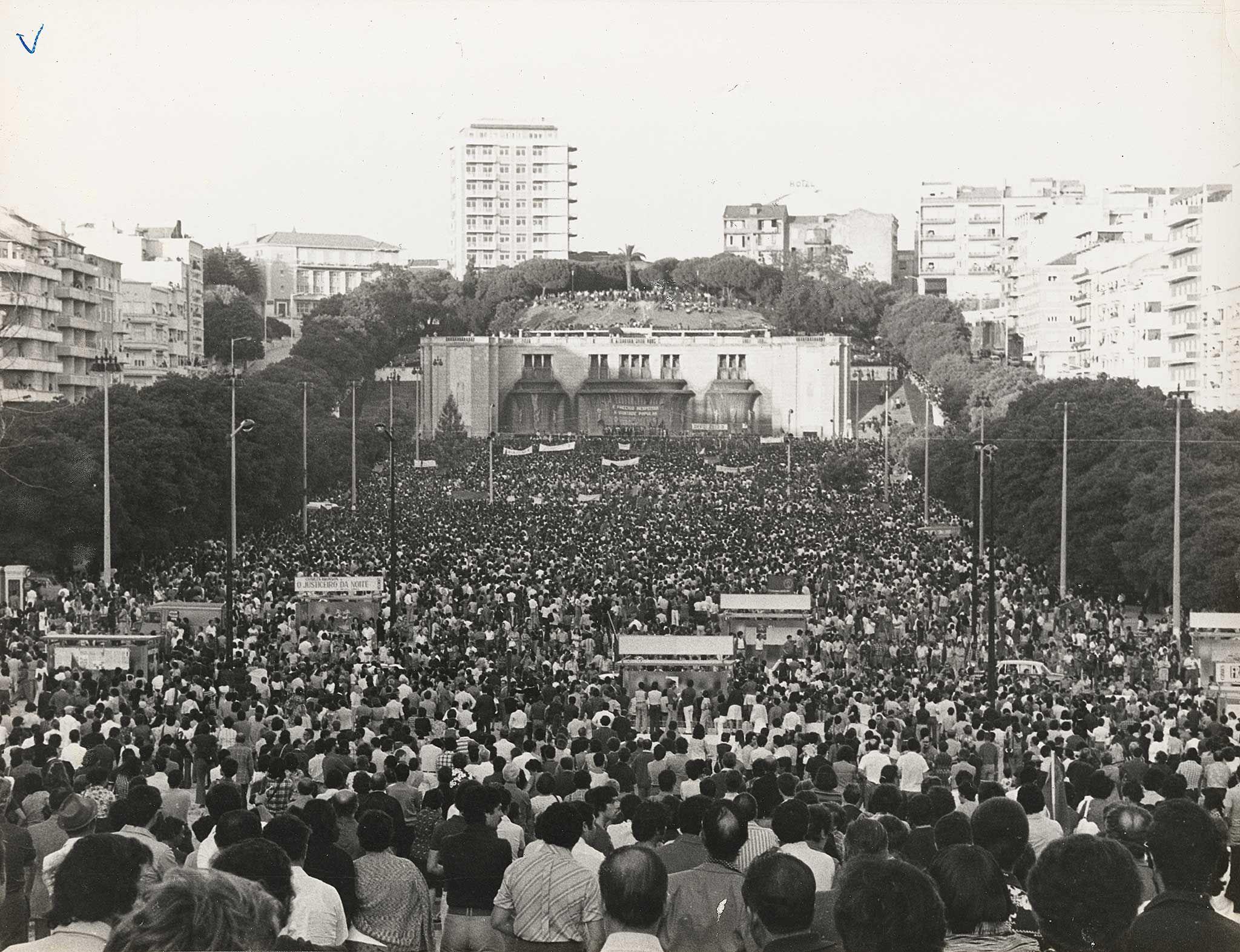
“Daily, mingling with the popular masses, our militants reflected, through their fervour, the deep sentiments of the Portuguese people, weary of disorder and anxious about the threat of a new dictatorship looming on the national horizon. When we embarked on this struggle, we were certain we were responding to popular aspirations. By shirking our duties, we would have played into the hands of a right-wing that would have been happy to channel the growing discontent.”
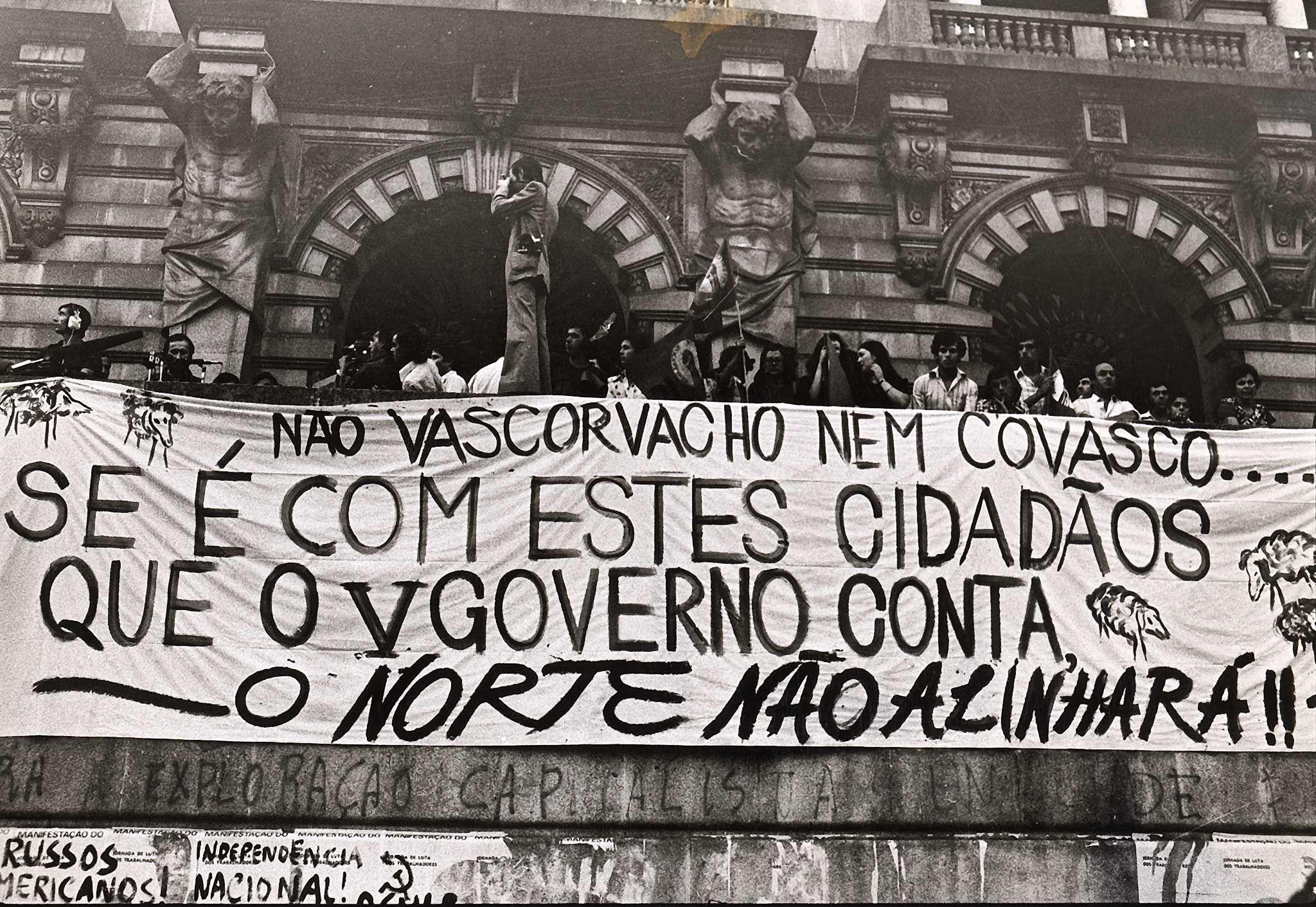
The VI Provisional Government
“The government began work by preparing an emergency plan to address the severe economic problems, secure foreign aid and restore some order to labour relations. More than any other, it needed authority and moral strength to lead the country to the legislative elections scheduled for spring 1976.
The fanatics of subversion understood this and immediately sought to sabotage the VI Government wherever they could.”
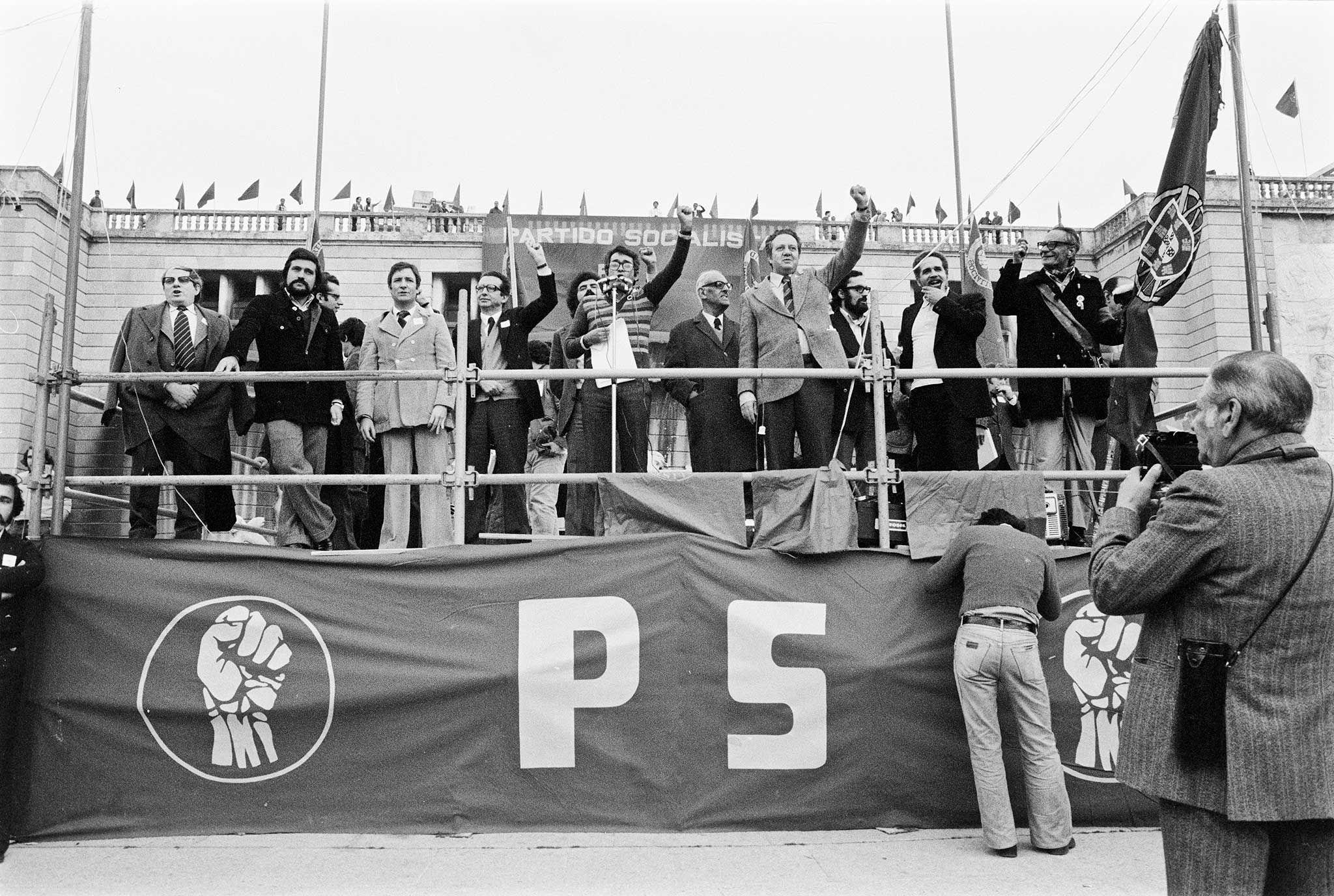
The siege of the Constituent Assembly
“It was the day of my first speech in the Assembly. I had just explained why my party opposed the immediate unilateral recognition of the MPLA and was returning to my seat when I was told that a large demonstration of construction workers was outside the Palace. I went to a window and realised that what was effectively a paramilitary militia, framing the demonstrators, was preparing to occupy key positions near the exits. I immediately imagined what would follow: siege, ultimatum, blackmail, etc., and decided it would be better not to be inside when that happened.”
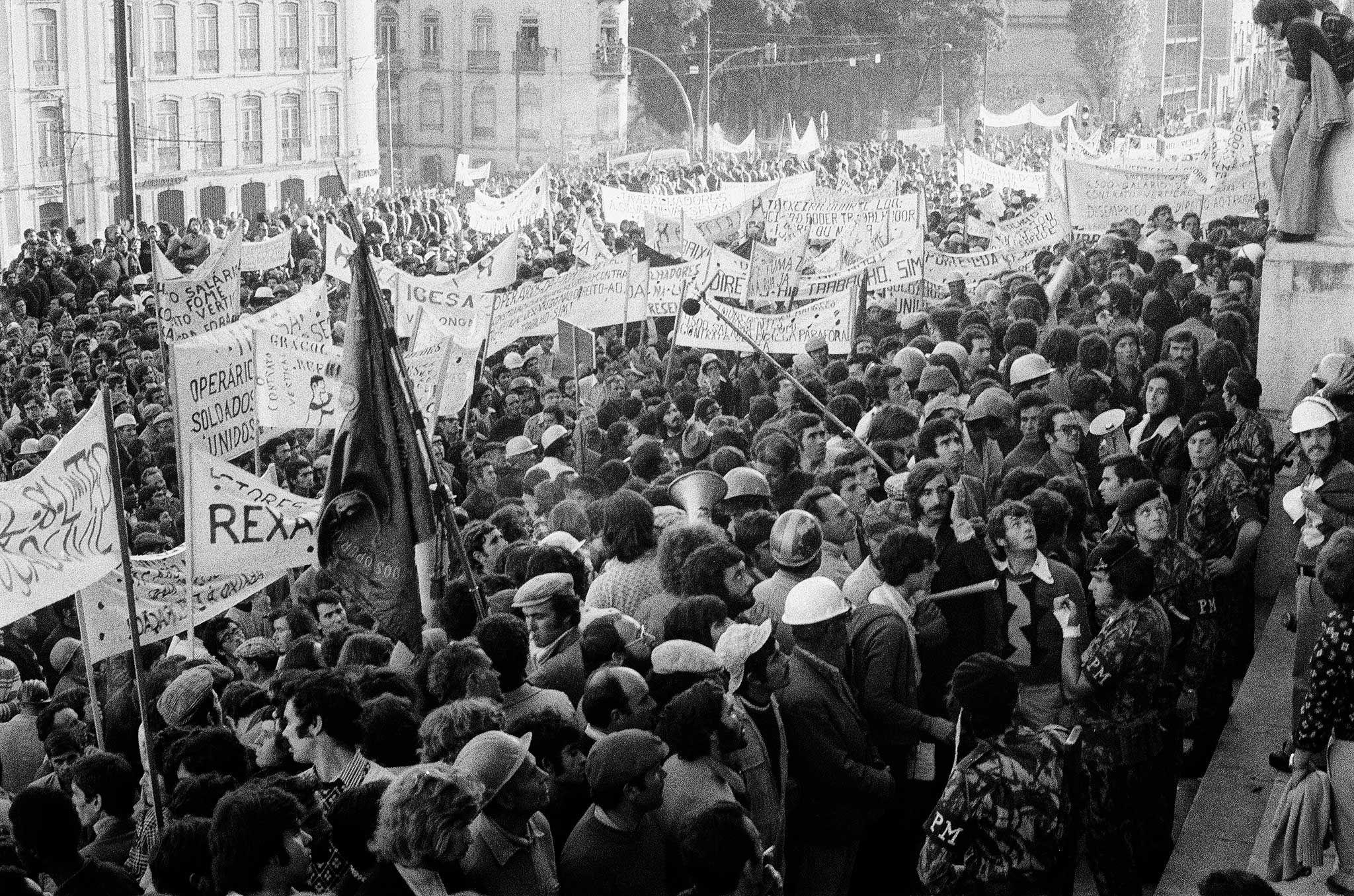
25 November
“When, in the early hours of 25 November, the paratroopers’ revolt broke out, it was clear that the adventurers, faithful to their promises, had begun the preliminary phase of an insurrection. (…) 25 November saved the Revolution. Had the reckless adventure of the communists and leftists succeeded, Portugal’s history would have been marked by a ‘Lisbon Commune’ and a civil war: the insurgents might have held out for a month, perhaps more, before being crushed. The country would then have been trampled by new dictators, eager for revenge and power.”
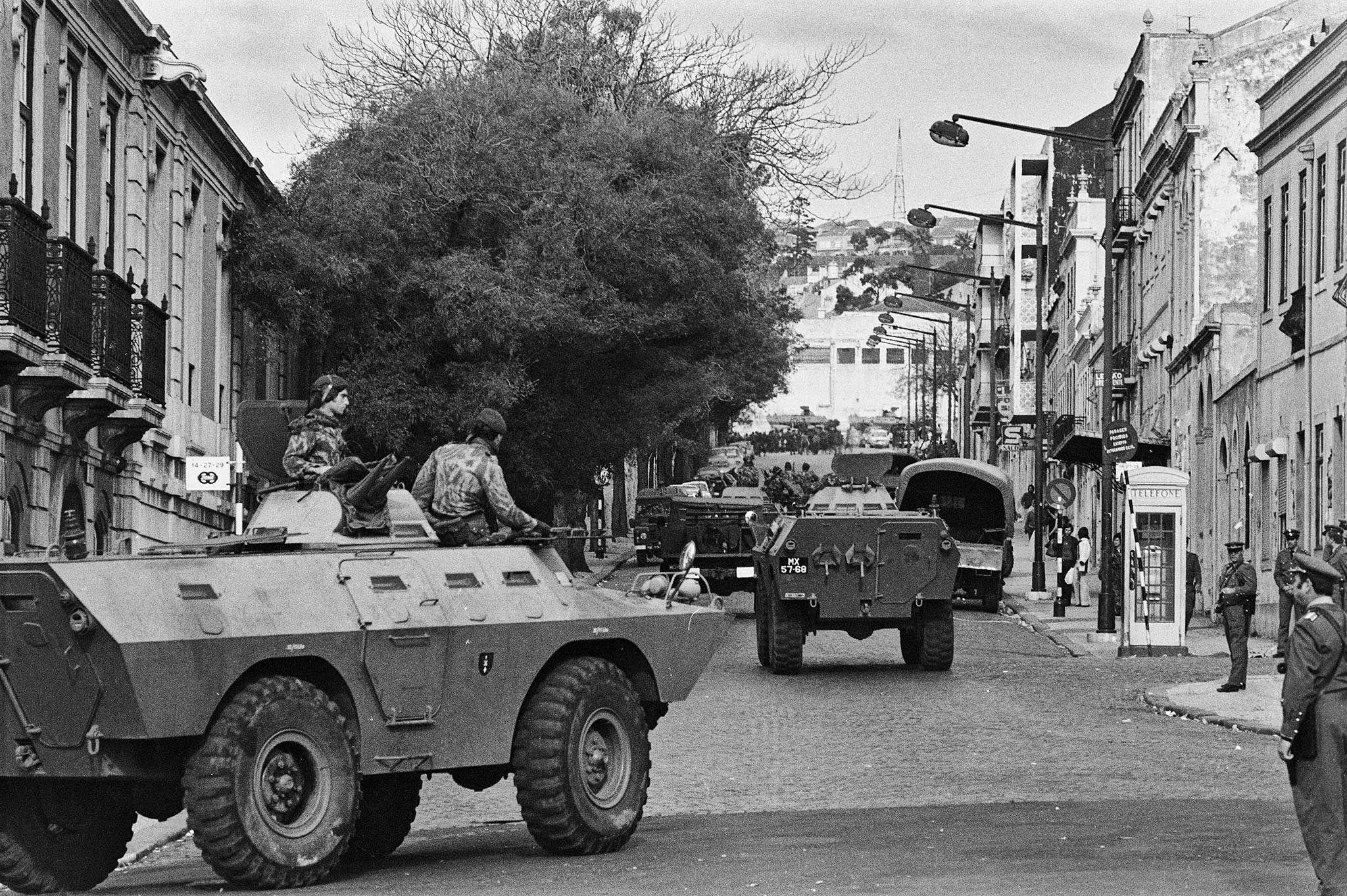
Prime Minister of the First Constitutional Government
“My first government was a kind of laboratory of political science, with an intensive course — we learned everything in just one year. It was an experience unknown to any Western Socialist Party until then (…). We encountered many difficulties within that government, which lasted a year and a half. Nevertheless, we succeeded in implementing our policy despite strikes, which we accepted and respected, demonstrations, attacks of all kinds, and intrigues both domestic and international.”